


Skip to main contentSkip to footer

RISE WALL DIFFERENCE

Comparing Rise Wall with traditional formwork blockwork and other PVC formwork systems? Rise Wall is positioned as the world’s first lay flat permanent formwork system which helps improve transport storage and handling while reducing bulky site logistics. The system is designed by builders with practical on site experience and aims to reduce installation time, improve build efficiency and provide a smarter alternative for concrete wall construction.

Speed, strength, and savings in every build. This lay-flat permanent formwork is lighter to handle, faster to install, and cuts costs by up to 50%. The double-skin design prevents bulging, while the W-punch cradle ensures accurate steel placement. Unlike timber, blockwork, or precast panels, it’s easy to transport, store, and adapt on-site—making it the smarter choice for modern construction.
The difference between Rise Wall and other non-lay flat PVC formworks

As the worlds first and currently only lay flat permanent formwork system, Rise Wall brings a wide range of benefits compared to alternative construction approaches.

Designed by builders with decades of on-site experience, Rise Wall offers a new construction experience that delivers real advantages for your team, reducing costs and boosting construction speed at the same time.

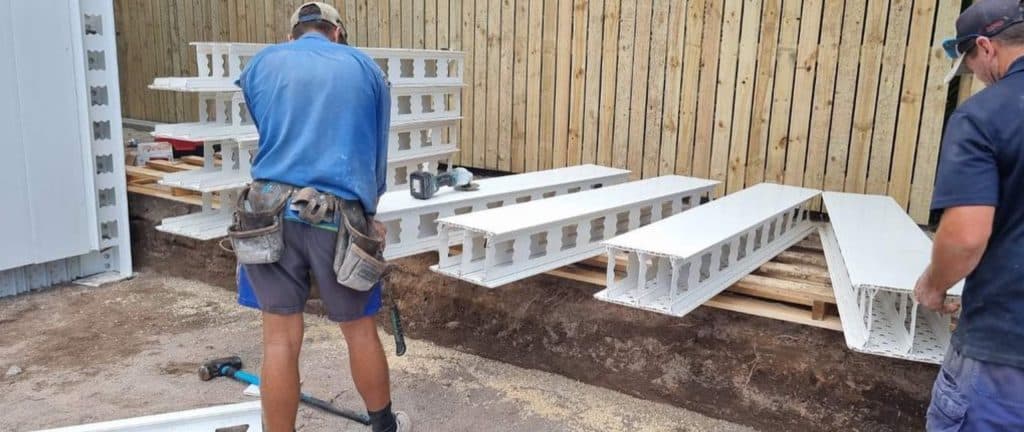
With Type C, Class 1 and 10 Residential building certifications, Rise Wall is ready for your next project, regardless of location. The advantages of the unique lay-flat technology are not just transport costs, but also practicality. With the reduced space needed, Rise wall means even the remotest site has the option of using our technology, eliminating the need for core filled blockwork and allowing modern, efficient construction methods wherever you are working. Rise Wall embraces lessons learned on real sites by real builders. Beyond the transport and storage impact of the lay flat design, Rise wall is also a direct replacement for core filled blockwork, using the same dimensions for ease of use and planning. It is easy to cut, and with its double skin, much stronger than alternatives, ensuring no bulges, bowing or blow outs.

We know that mistakes can be costly in both time as well as money, and we have created Rise Wall to help there too. The W punch reo cradle means panels can be installed either way up, making it much easier to install steel accurately throughout the project.

With offcuts being reusable, and a simple process for creating edge formwork, we minimise waste too, making Rise Wall the sustainable option for concrete construction.

Traditional concrete formwork – Insitu concrete walls

The traditional approach here involves assembling timber framing within both internal and external ply shutters to create the formwork for the concrete to be poured. This is a labour-intensive process that includes:

Storage of the in-situ formwork timber in yard in between uses

Transport of concrete formwork timber and frames to site

Unloading and material handling of formwork system

Forming up – installing in-situ formwork before steel reinforcement installed

Closing – completing concrete formwork after steel reinforcement installed

Stripping concrete formwork after concrete has been placed and cured

Stacking formwork panels and loading out

Transporting formwork system back to yard

However, Rise Wall streamlines the process, with easily stored materials, faster installation and superior performance. Instead, the Rise wall system requires the following:

4 times faster to install than traditional formwork or blockwork

Unloading & material handling of lay-flat & compact concrete formwork system

Installing Rise Wall modular formwork panels

Install steel reinforcement inside Rise Wall to achieve structural wall design

Pouring concrete into Rise Wall permanent formwork.

While these on-paper differences look impressive, it is in real applications that the advantages of Rise Wall really show. With an average of 70% faster installation, and between 30% and 50% lower costs, Rise Wall is both cheaper and better performing thana traditional solution, while also speeding up the construction process.

Core filled blockwork – Besser blocks – Cinder blockwork

For a long time, the alternative to reinforced concrete walls has been the use of core filled block work. These blocks, often known as Besser blocks or cinder wall blocks, offer good performance, but require a lengthy, labour-intensive process to install. The process takes up a lot of room on site for storage, and is an inherently messy task, requiring sand, cement and mixing equipment, and a crew of tradies and labourers to carry out the work. It is a slow process too, with a crew managing just 25-30m3 per day, but until Rise Wall Products there were few effective alternatives.

A block construction schedule may look like the following:

Besser block construction involves significant material handling getting pallets of blocks, sand, cement and mixing equipment to the work face.

Core filled blockwork is typically laid with a crew of 3 tradesmen and 1 labourer. This crew will typically aim to achieve 25-30m3 per day.

Cinder or Besser block walls need to be properly cleaned out. This is process is often not done properly and creates significant mess on site.

Core filled block walls should also only be built to 1.5-2.0m high before being core filled which means for walls over 2.0m at least two concrete pump visits are required.

Besser block wall construction also typically involves more scaffolding and scaffold movement than permanent formwork

By contrast, Rise Wall permanent framework is transported and stored in a compact form, reducing both costs and space required, is incredibly fast to install, easily 3 times faster than blocks, and produces little mess or waste.

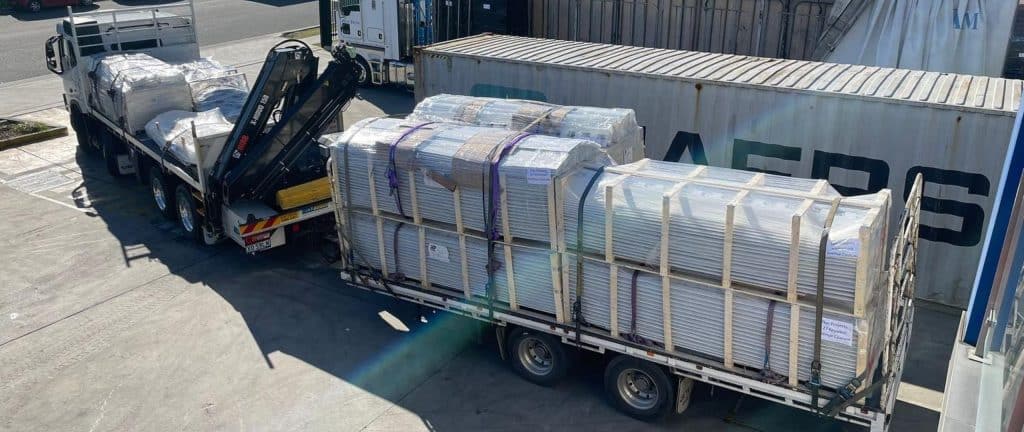
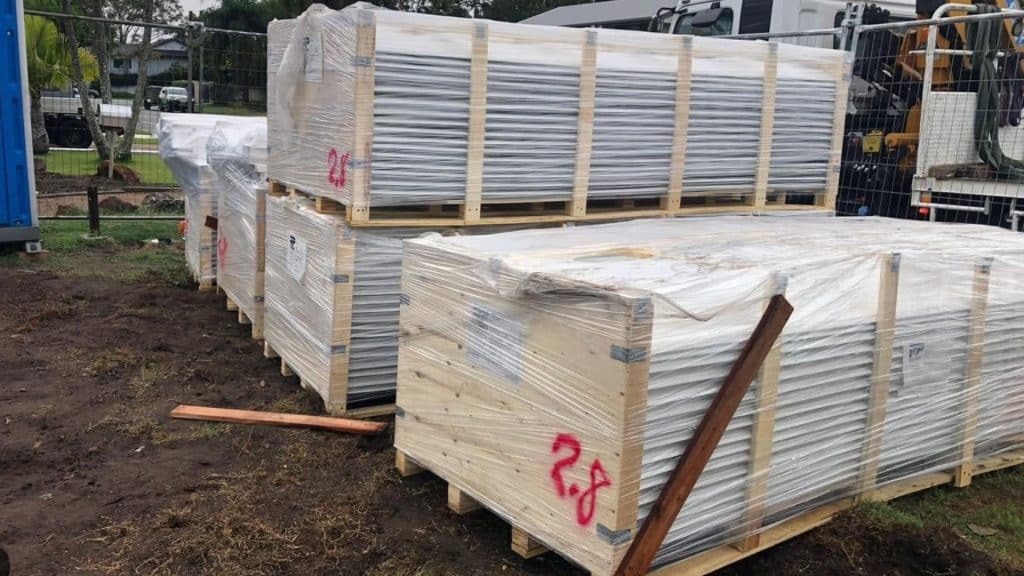
Delivered flat for compact, cost-effective transport and storage

A crew of 3 people can easily install 100m2 of Rise Wall permanent formwork wall in a day.

Rise Wall formwork panels do not need to be washed out and the concrete wall can be filled in one concrete pump visit.

Rise Wall permanent formwork is typically $20-50/m2 more cost effective than core filled blockwork.

Rise Wall Difference

Why Rise Wall Vs. Traditional Form Work

Rise Wall

Installs up to 70% faster than blockwork

Lay-flat design allows 5x more formwork per delivery

Lightweight and easy to handle, reducing labour strain

Water-resistant with 70% less waterproofing needed

Cost-effective with lower labour and material expenses

Stronger twin-skin panels with accurate reinforcement placement

Compact storage, ideal for tight or remote sites

Certified and compliant permanent formwork solution

Shorter lead times, keeping projects on schedule

VS

Block Wall

Installs up to 70% faster than blockwork

Heavy blocks make handling and transport difficult

Requires more labour, raising overall costs

Significant waterproofing needed, adding extra work

Storage challenges on-site due to bulk

More waste generated during construction

Less efficient transport, fewer units per truckload

Structural reinforcement is harder to place accurately

Longer lead times for project completion

Higher overall costs in both labour and materials

Why Rise Wall Vs. Traditional Form Work

Feature / Benefit

Transport & Storage

Installation Speed

On-Site Handling

Labour & Cost

Strength

Waterproofing

Waste

Concrete Bond

Applications

Delivery Reach

Project Timeframe

Innovation

Compliance

Best Suited For

Rise Wall

Lay-flat system: 5x space saved

Cut on site, easy adjustments

Faster install, less bracing

Less labour, lower costs

2× stronger than blockwork

Integrated, minimal risk

Minimal waste

Perforated → superior adhesion

Residential, retaining walls

Cost-effective: Local & Global

Quicker completions

Patented, unique system

Aust. Standards + Patents

Fast, strong, cost-effective builds

Non-Layflat PVC Formwork

Bulky, rigid, costly transport

Hard to modify

Slower with bracing

Higher labour demand

Strong but over-engineered

Needs extra sealing

Material off-cuts

Smooth, weak bond

High-rise / commercial

Expensive for remote

Slower installs

Legacy tech

Certified

Large-scale commercial

Block Work

Bulky, heavy and expensive

80% slower than PVC

Heavy, bulky and disruptive

High labour costs

Same as PVC

Porous material need waterproofing

30-50% more water than PVC

Weak mortar joints

Traditional resi/basements, lowrise

Need local supply

Installation is slow

Outdated, no innovation

Accepted (dated)

Small, low-rise resi

In-Situ Concrete

Needs formwork, costly pallets

Skilled formwork needed

Curing delays

Expensive skilled crews

Extreme (overkill)

Good (if formwork quality high)

Formwork waste

Good, formwork-dependent

Infrastructure/commercial

Needs batching plants

Slowed by curing cycles

Conventional

Certified

Infrastructure/commercial

Why Rise Wall Vs. Traditional Form Work

Precast Concrete – Precast Concrete Panels

Precast concrete panels are, as the name suggests, prefabricated offsite and delivered to site ready to install at the appropriate time. This allows for panels to be created in the very best conditions to ensure they deliver the consistent, high performance needed. However, it also brings with it a number of challenges.

Shipping and moving readymade concrete panels are an obvious downside, but there is more. To ensure accurate construction, and that panels will fit once delivered requires extensive shop drawings, not only adding to the project cost, but removing any flexibility in the construction process. There is no opportunity to adjust anything, otherwise the panels simply will not fit.

This process includes the following tasks:

The precast concrete panels are transported to site on large trucks often with costly wide load permissions required.

The precast panels are then craned into position with large material handling equipment and cranes.

Precast panels are faster to install and can also be prefabricated to larger heights than permanent formwork.

Onsite adjustments are limited, as precast panels leave little room for changes once delivered, often causing costly delays if modifications are required.

With Rise Wall modular concrete forms, there are no such large load transport needs and associated costs, with compact frames being delivered and easily stored on site. Because panels can be easily cut and installed fast, changes can be accommodated right up into the concrete is poured, making Rise wall an incredibly adaptable solution.

Without the need for cranes and other heavy machinery, not only is Rise Wall less disruptive on site, but can offer savings of $50/m2 or more compared to prefabricated panels

Tilt Panels – Tilt Slabs – Tilt panel construction – Tilt-up panels

Tile Panels are very similar to precast panels, however rather than being made in a facility away from the project, they are cast on site, then installed. They do have some of the issues of a prefabricated solution, they require shop drawings and lock in the design early, preventing adjustments, and require significant machinery on site that take up a large area.

Once cast though, using heavy lifting equipment makes them very fast to install.

However, Rise wall avoids all the extra machinery and expense, while also allowing for adjustments thanks to the ease of cutting and customizing fit during installation, with no shop drawings needed.

The result of this is that, compared to tilt panels, Rise Wall not only removes the need for costly cranes, oversized machinery, and early-stage shop drawings, but also gives builders the flexibility to make adjustments onsite. This combination of savings in labour, equipment, and design costs means Rise Wall can reduce expenses by between $10 and $30 per square metre on any project, while also streamlining the construction process.

Stay in place (SIP) formwork

Stay in Place framework is that which is designed to be installed, filled and then left in place, rather than removed like traditional formwork. It eliminates a significant part of the work and the need for ongoing storage of your form materials.

Designed from the beginning to be a SIP formwork, with its easy of transport, fast installation and superior performance, Rise Wall is one of the most cost-effective stay in place formwork solutions available today.

Rise Wall Application

Frequently Asked Questions

Rise Wall provides a permanent formwork system that can reduce labour handling and installation time while creating a reinforced concrete core.

Lay flat formwork means the panels can be transported and stored in a flatter format which can help reduce storage and handling issues compared with bulky alternatives.

Faster installation can reduce labour pressure project delays and site coordination challenges for builders and contractors.

Yes. The difference page states Rise Wall was designed by builders with decades of on site experience.

Yes. The lay flat system is designed to improve storage transport and handling which can support more practical site logistics. To learn more about the system, download the Rise Wall brochure.

Build SMARTER. Build FASTER. Build STRONGER.

Switch to Rise Wall and cut costs, speed up installation, and deliver higher performing concrete walls. Join builders by choosing smarter solutions for better projects.

Rise Products & Equipment
1300 205 541