



Rise Wall Applications
Explore the wall applications and project conditions that determine suitability.
Rise Wall is plastic formwork that stays in the wall. Here is how it compares with steel, plywood, aluminium and foam.
If you are a builder choosing how to form a concrete wall, or a specifier checking a material, this page sets out plastic formwork for concrete side by side with the alternatives.

Plastic formwork is a mould for wet concrete made from a plastic such as PVC, HDPE or expanded polystyrene, instead of timber or steel. PVC is polyvinyl chloride, a rigid plastic. HDPE is high density polyethylene, a tough plastic that concrete releases from easily. Expanded polystyrene is a lightweight foam.
It comes in three kinds, and the difference that matters most is whether it comes off after the pour or stays in the wall.
| Type | What it is | Stripped or permanent | Typical use |
|---|---|---|---|
| Reusable plastic panels and edge boards | Plastic formwork panels or flexible edge boards that form the concrete, then come off and are used again. | Stripped and reused | Slab edges, paths, curves, repetitive pours |
| Plastic moulds | Shaped moulds, often HDPE, that concrete releases from. | Stripped and reused | Precast elements and shaped items |
| Permanent PVC wall formwork | Hollow PVC panels that are filled with concrete and stay as the wall's face. | Permanent, nothing stripped | Structural, retaining, basement and tank walls. This is Rise Wall. |
The split matters when you search. If you want plastic formwork for a slab edge, a path or a curved kerb, you want the first kind, which is reusable formwork. If you want a concrete wall with nothing to strip, you want the third.
Rise Wall is the third kind: stay in place formwork for concrete walls. Rise Wall uses twin skin PVC panels with internal reinforcement cradles. The panels form the wall cavity and remain in place after the concrete is poured, so the plastic concrete formwork becomes the face of the wall and there is no stripping.
The panels are lay flat panels, delivered flat for compact transport and storage before assembly on site. Rise Wall is currently offered for 200mm thick walls. Confirm panel dimensions and availability against your project drawings when requesting a quote.
Unlike plastic concrete forms that are stripped and reused, Rise Wall panels are bought once and stay in the structure. Rise Products is an Australian owned and operated business. Rise Wall was designed by builders for builders.
The Vinyl Council of Australia explains how PVC wall systems protect and shape concrete. For the full product detail, see our permanent formwork wall system page.

Explore the wall applications and project conditions that determine suitability.
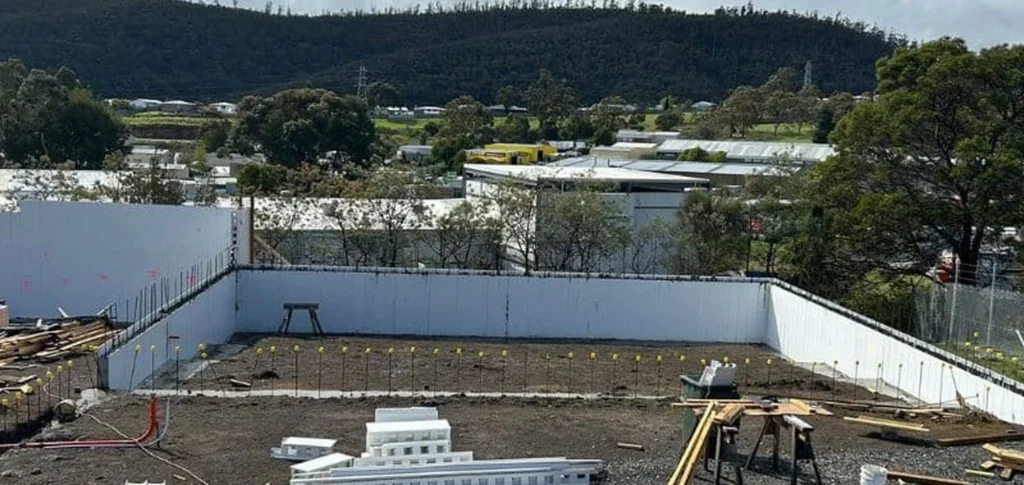
Form reinforced concrete retaining walls with engineered footing and drainage details.
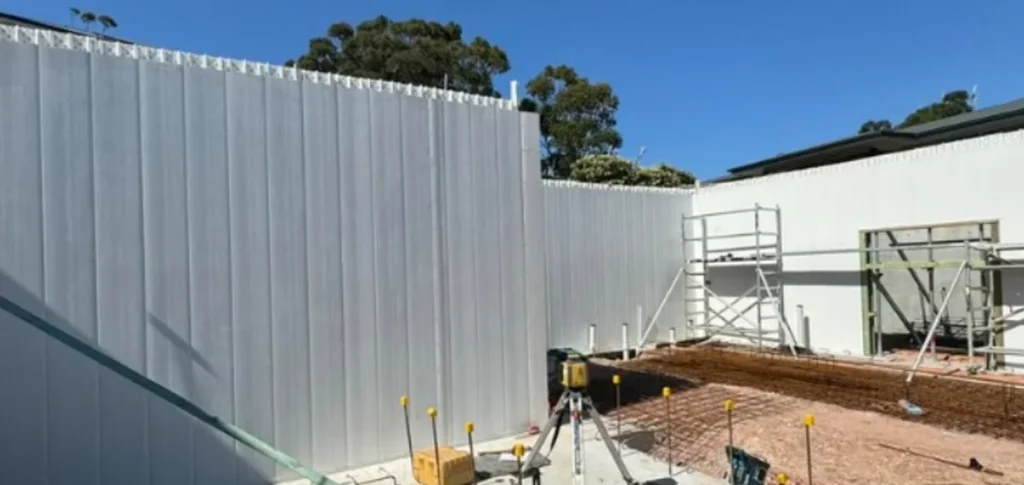
Explore basement wall applications with project-specific waterproofing and drainage.
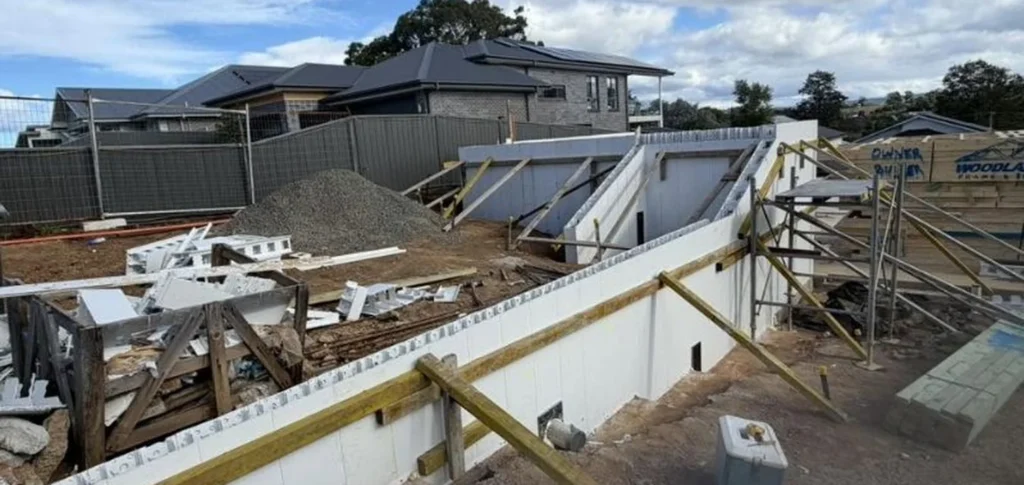
Review external-wall uses, finishes and project-specific design considerations.
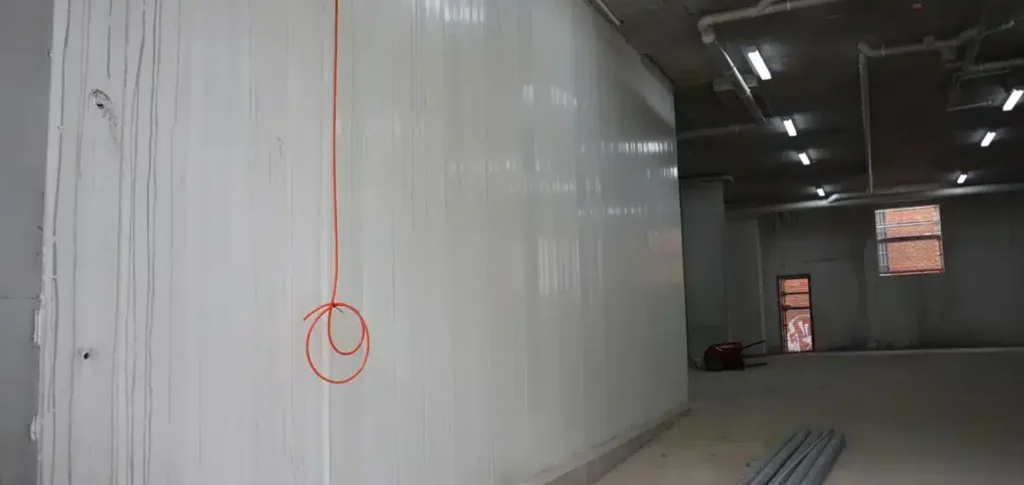
Review structural wall applications, subject to the project design and required performance.
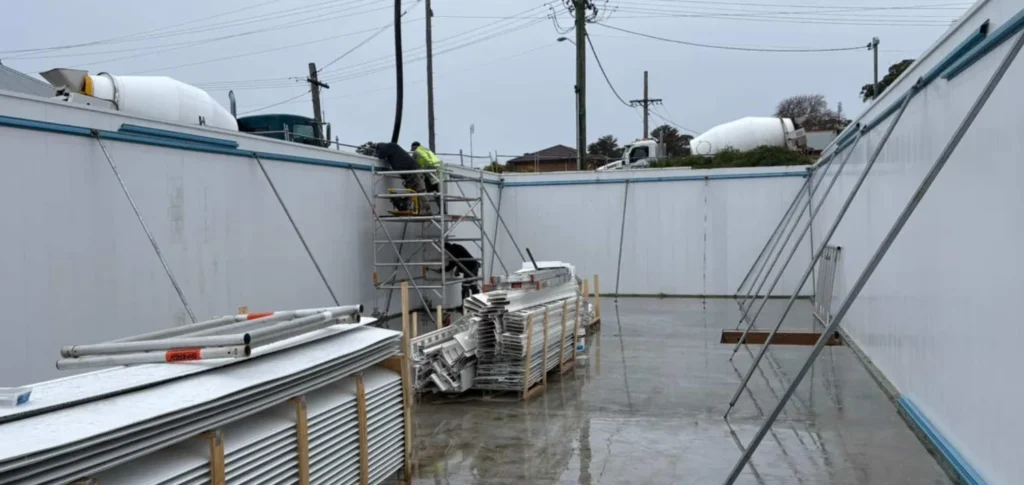
Form reinforced concrete walls poured in their final position, with permanent panels left in place.
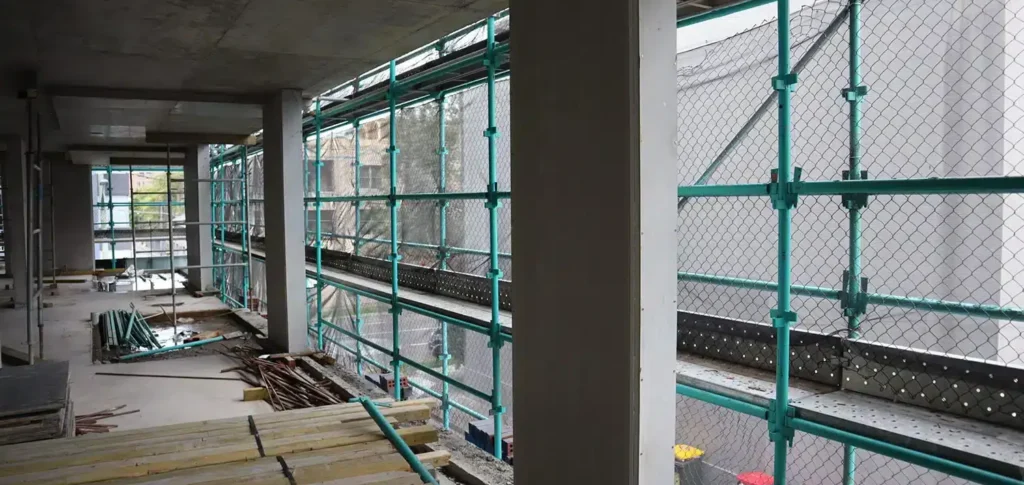
Discuss structural wall and shaft applications, with dimensions and performance confirmed for the project.

Explore smaller wall applications, with the design, finish and site requirements assessed for the job.
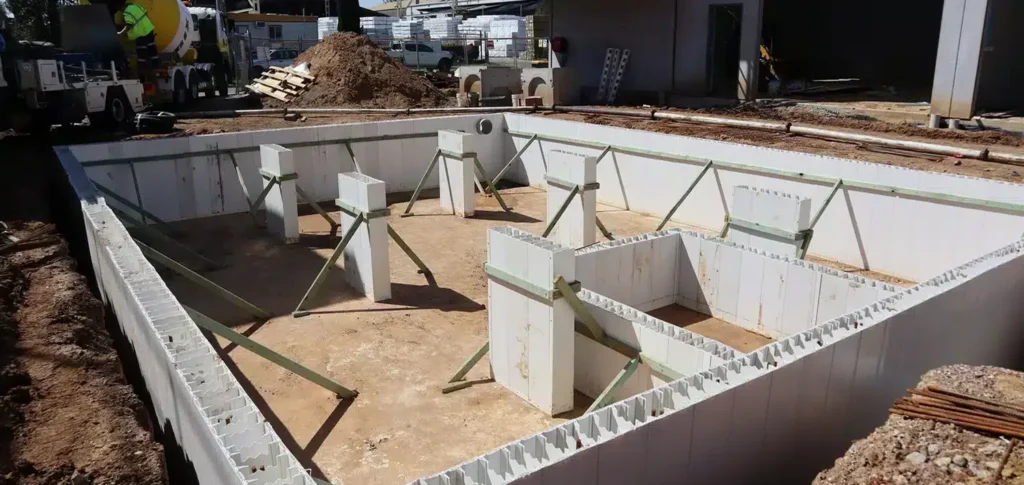
Discuss permanent formwork for pits and tanks with a project-specific water-retaining design.
No single material is right for every job. Each of the common formwork materials has work it suits, and permanent PVC wall formwork is the one that leaves a finished wall with nothing to strip. The table compares them on the points a builder weighs.
| Point of comparison | Steel or aluminium | Plywood or timber | Foam (EPS) or insulated concrete forms | Rise Wall PVC |
|---|---|---|---|---|
| Stripped or permanent | Stripped and reused | Stripped, limited reuse | Permanent | Permanent |
| What is left | Off form concrete | Off form concrete | Foam faced wall, needs a finish | PVC faced wall |
| Handling | Depends on panel size and system | Depends on panel size and system | Light | Lay flat, handled before filling |
| Waste at the end | Reuse and waste depend on the system and project | Reuse and waste depend on the system and project | Offcuts and packaging | Offcuts and packaging |
| Often chosen for | High reuse on repetitive large pours | One off shapes and curves | Designs where thermal performance is a focus | Walls where handling and a PVC face suit the project |
Steel and aluminium. Steel formwork and aluminium formwork are built for reuse. On a large job that pours the same wall or floor many times, the panels are used across the cycles, and they leave an off form finish, meaning the concrete surface as it comes out of the mould. Aluminium is lighter than steel, and hand set aluminium systems are used on repetitive multi storey work. Handling depends on the panel size and system, and every pour is followed by a stripping stage.
Plywood and timber. Plywood formwork is cut and shaped on site, which makes it a practical choice for one off shapes and curves. Formply, the film faced plywood made for formwork, gives a smoother face than raw timber. Sheets wear with use, so reuse is limited, and every wall still has to be stripped and cleaned.
Foam and insulated concrete forms. Foam formwork stays in the wall, like PVC. It is often considered where thermal performance is a focus of the design, and the foam face needs a finish applied over it. The formwork material is only one part of the wall build-up, so assess the project insulation and thermal requirements for the complete specified wall.
Rise Wall PVC. Rise Wall suits walls where lay flat handling and a PVC face suit the project. The PVC formwork remains as the wall face after the pour. Any paint, render, tile finish or cladding must be selected and detailed for compatibility with the specified panel and project requirements. It does not suit every wall, as the next section explains.
Request the relevant product documentation for the proposed wall, including any applicable fire or water performance evidence, for review by the project engineer and certifier. For the comparison with blockwork, see the Rise Wall difference.
Rise Wall panels go from delivery to a finished wall face in five stages, and none of them is stripping. This is how the material is handled; the full build sequence sits on the difference page.
For the full installation sequence, see the Rise Wall difference.
Permanent PVC wall formwork suits walls, not slabs, and it suits walls where a PVC face matters more than reuse. These are the walls Rise Wall is offered for, subject to the design.
Basements, retaining walls, pits and tanks are in contact with soil or water. For information about water resistant applications, see Rise Wall Water Resistant. Waterproofing, joints and drainage must be detailed for the particular project. See our pages on retaining walls and basement walls. Tanks and pits hold water in rather than keep it out, so the engineer’s water retaining design governs.
Load bearing walls, external walls, blade walls and shafts carry loads and often have fire performance requirements. The structural engineer sets the reinforcement, and the panels hold it in place during the pour. Fire performance must be checked for the specified wall construction. External walls face the weather, so the finish the design calls for decides fit. See our pages on internal load bearing walls and in situ concrete walls.
Fences, planter boxes and balcony upstands are low walls repeated many times on one project. Lay flat panels suit repeated set out, with no forms to strip at each wall, and suitability depends on the wall size, access and installation setup. The full list of wall types is on our Rise Wall applications page.
Rise Wall is not the answer for every pour. Reusable slab edge forms and permanent wall formwork do different jobs. For slabs, curved geometry, an exposed concrete finish or repeated formwork reuse, discuss the required outcome with Rise and the designer before selecting the system:
See published Rise Wall Water Resistant project examples in Cabramatta and Surrey Hills on our completed projects page.
Plastic formwork is a mould for wet concrete made from plastic instead of timber or steel. It comes in three kinds: reusable panels and edge boards that are stripped after the pour, HDPE moulds for shaped and precast items, and permanent PVC wall formwork that stays in the concrete as its face. Rise Wall is the third kind.
Rise Wall uses twin skin PVC panels with internal reinforcement cradles. The panels form the wall cavity and remain in place after the concrete is poured. Any paint, render, tile finish or cladding must be selected and detailed for compatibility with the specified panel and project requirements.
Some is and some is not. Reusable plastic formwork, such as slab edge boards and wall panels, is stripped and used again. Permanent PVC wall formwork like Rise Wall stays in the wall, so it is bought once for each wall and is never stripped. Reusable formwork suits slabs and repeated pours, where the same shape is cast again and again.
Steel formwork is built for reuse on large, repetitive pours, where the same forms cycle many times, and each pour is followed by stripping. Permanent PVC wall formwork arrives lay flat, is handled before filling, and leaves a PVC face with no stripping stage. The comparison table on this page sets out both.
Plywood formwork suits one off shapes, because it is cut and fixed to suit on site. PVC wall formwork needs no stripping and leaves no worn sheets at the end of the job. Plywood also needs release oil and cleaning between uses. Plywood leaves an off form face; Rise Wall leaves a PVC face.
Both stay in the wall. Insulated concrete forms, often expanded polystyrene ICF blocks stacked and filled with concrete, are chosen with insulation in mind and need a finish over the foam. ICF blocks are usually stacked dry and interlock, like large hollow bricks. The formwork material is only one part of the wall build-up, so assess the project insulation and thermal requirements for the complete specified wall.
Fire performance must be checked for the specified wall construction. Ask Rise for the relevant supporting documents and have your engineer or certifier confirm that the proposed wall meets the project requirements.
Confirm the permitted storage and exposure conditions with Rise before leaving panels exposed. Follow the current product instructions for protection before the pour and for any permanently exposed wall face.
It depends on the local facility. Check whether a suitable local recycler accepts the specific PVC offcuts from your project, and follow its separation and contamination requirements. Confirm any supplier take back arrangement before relying on it. The Vinyl Council of Australia publishes general information on PVC recycling in Australia.
Rise Wall is currently offered for 200mm thick walls. Send the wall dimensions, panel requirements, site address and required delivery date, and the quote will confirm available sizes, any custom manufacture, freight and expected lead times.
Panel supply pricing depends on the specified dimensions, quantity, stock or custom requirements, and delivery. Request an itemised quote and allow separately for any concrete, reinforcement, installation labour and equipment not included. Permanent formwork is bought, not hired, so compare it with hire plus the labour to erect and strip removable forms.
Writing a specification? Request the Rise Wall specification and relevant technical documents for your proposed application. Pricing a job? Send the drawings, wall heights and lengths for a quote.
Call 1300 205 541, or visit us at 72A Willoughby Road, Crows Nest NSW.
Contact Rise with your project location and required delivery date: delivery availability, freight and lead times are confirmed for each order. For projects in Greater Sydney, see our page for formwork suppliers in Sydney.