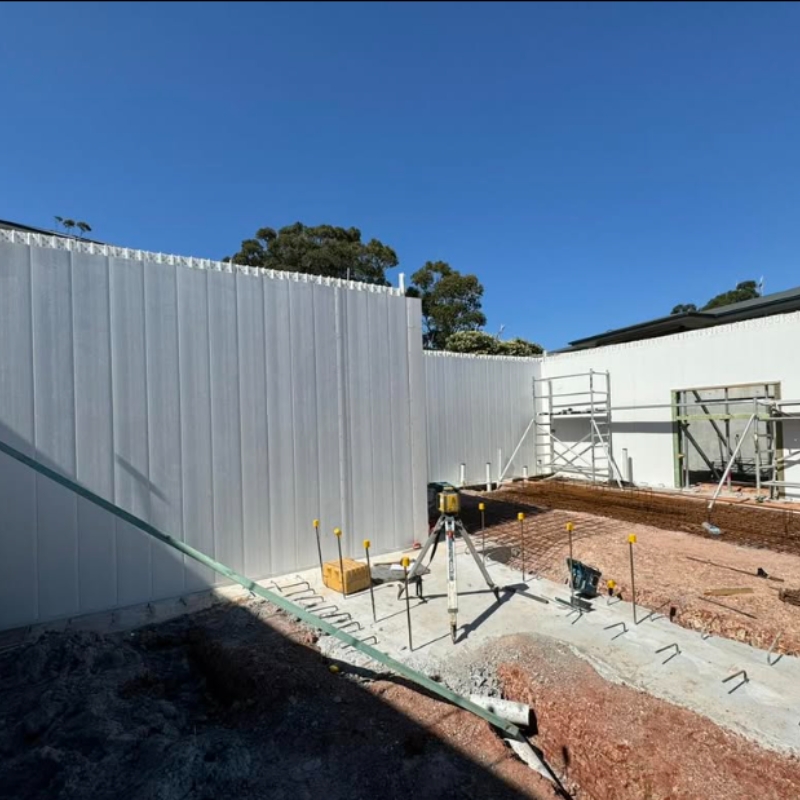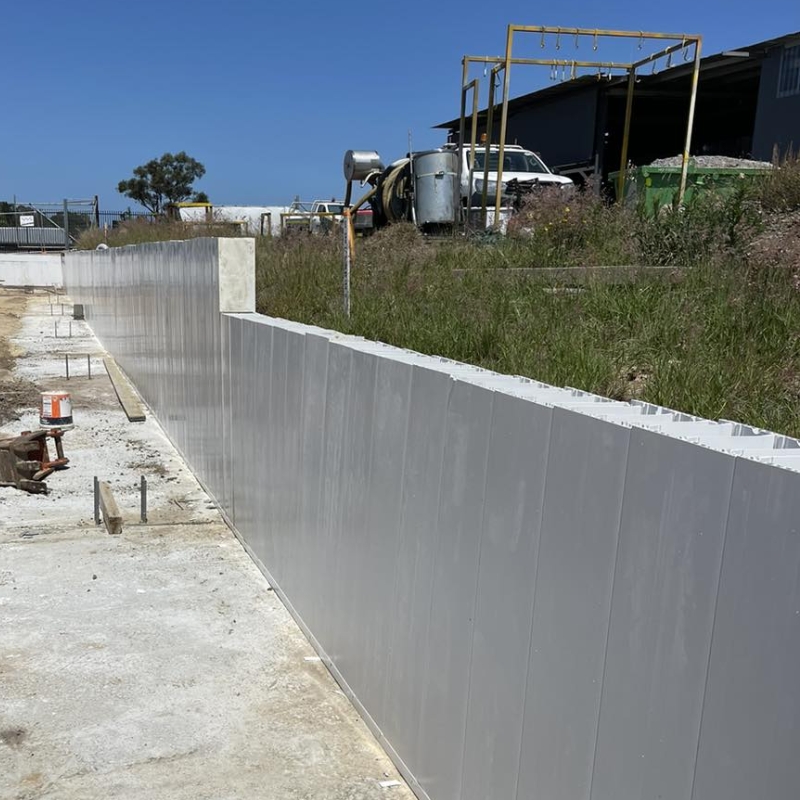



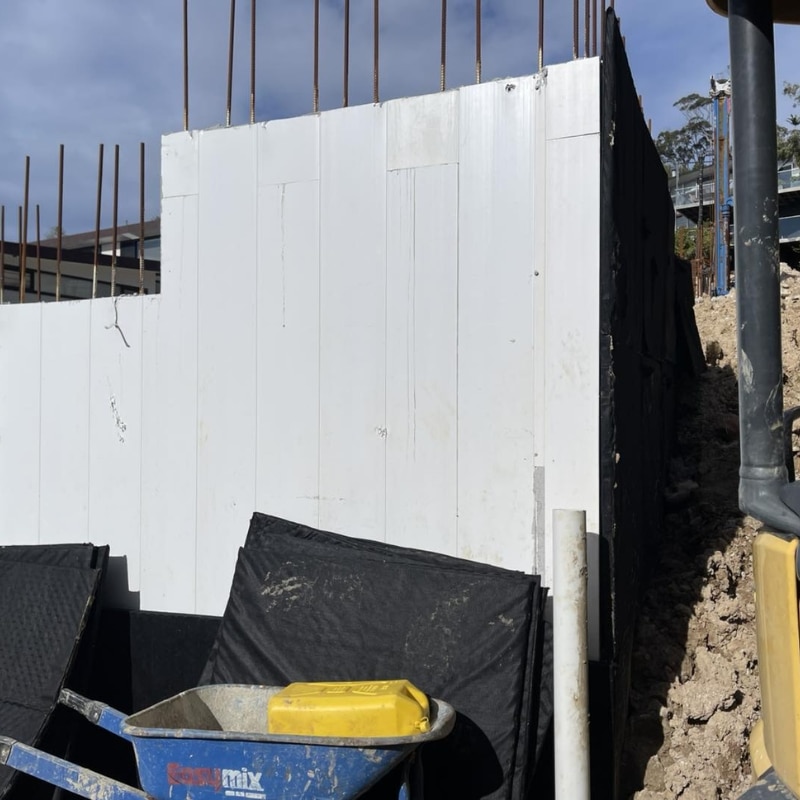
Labour on the concrete wall rarely blew out because the crew “worked slowly”. It blows out because the wall method forces too many steps, too much handling, too much bracing, and too much waiting around for the next trade to show up.
If you want meaningful labour reduction on walls, the biggest lever isn’t squeezing minutes out of the pour day. It’s choosing a wall approach that removes entire activities from the program.
On Australian sites, that usually comes down to three things:
• Fewer steps (and fewer “handoffs”)
• Less bracing and rework
• Faster logistics and cleaner sequencing
Where labour actually goes on a concrete wall build
Before you change anything, it helps to be honest about the labour sinks. On most jobs, labour clusters around:
• Set-out and dimensional control (especially corners, returns, and openings)
• Reinforcement placement (congestion, laps, starters, and penetrations)
• Forming and bracing (alignment, checks, adjustments, safety)
• Coordination time (waiting on inspections, waiting on trades, rework from late changes)
• Post-pour work (stripping, patching, grinding, waterproofing preparation, straightening)
The “hidden” labour is the killer: rework and coordination. Every time the wall method requires multiple trades to touch the same area in a tight sequence, you create downtime and risk. That’s why the most reliable labour reduction comes from reducing steps and simplifying the workflow.
Q: What’s the fastest way to reduce labour on concrete walls?
The fastest way is to remove activities entirely: choose a wall system that installs quickly, needs less bracing, reduces steel and handling, and avoids stripping and complex sequencing. When the wall method is simpler, you cut not only hands-on time, but also the coordination time between trades that inflates labour on real jobs.
The labour-reduction principle that actually works: remove steps, don’t just “work faster”
Many wall methods are labour-heavy because they’re built in stages:
• Build a wall element slowly (block-by-block or multi-part assembly)
• Brace heavily to manage movement
• Wait for checks and adjustments
• Pour
• Strip or dismantle
• Patch and rectify
• Waterproof extensively in wet areas
If your method forces all of that, your labour will always be vulnerable to delays.
A more labour-efficient approach is a stay-in-place forming method where the panels are installed, steel is placed, the concrete is poured, and you’re done—without stripping and without a high-touch sequence.
This is exactly where systems like Rise Wall (by Rise Products) fit: a builder-friendly wall forming panel approach designed to simplify installation, reduce bracing, cut coordination, and speed up the wall programme—while keeping logistics tight through a lay-flat transport and storage profile.
How Rise Wall connects to labour reduction (naturally, on-site)
When a product claim says “labour reduction” it only matters if you can see how it happens on a real build: fewer steps, fewer components to handle, fewer checks and rechecks, and fewer return visits to the same wall. In practice, the big wins come when the installation process is simplified enough that you can realistically achieve up to 50% labour reduction through simpler installation and fewer steps.
For a practical overview of formwork safety and planning considerations, you can also refer to the Safe Work Australia guide to formwork.
12 practical ways to reduce labour on concrete wall builds
1) Standardise wall geometry and repeats wherever possible
Every unique corner, nib, step, or odd-length wall section adds set-out time and increases the chance of misalignment.
Labour-saving moves:
• Align walls to a consistent module where the design allows
• Repeat opening sizes and lintel details
• Reduce unnecessary returns and offsets
• Keep corners consistent (same detail each time)
Why it works: crews get faster when details repeat, and QA becomes easier.
2) Lock in penetrations, cast-ins, and embeds earlier than you think
Late penetrations cause rework, especially on basement and retaining walls where waterproofing and backfill sequencing is tight.
Labour-saving moves:
• Run a “pre-install embed check” before panels go up
• Confirm service routes and avoid “we’ll core it later” as a default
• Pre-plan lifting points and temporary works interfaces
Why it works: missing cast-ins lead to drilling, patching, and waterproofing rework.
3) Choose a wall approach that reduces bracing and movement
Bracing isn’t just materials. It’s labour to install, labour to adjust, and labour to inspect. Wall movement during pour leads to delays and rectification.
A stronger, more stable system can reduce reliance on bracing and improve straightness. That stability is why strength claims matter in labour conversations: stronger, straighter walls with less movement during the pour (up to 2× strength vs blockwork) can translate into fewer bracing touchpoints and fewer “stop-and-fix” moments.
Q: Why does strength reduce labour?
Because movement during the pour costs time before, during, and after placement. If the wall holds line better, you spend less time bracing, checking, correcting, and patching. Strength links directly to straighter walls and fewer defects—both labour savers.
4) Reduce coordination points between trades
The most painful wall builds are the ones that require specialist crews in a tight chain. Every handoff is a risk.
Labour-saving moves:
• Simplify the system so a standard crew can install without niche labour
• Reduce “return visits” (come back later to strip, come back later to fix, come back later to waterproof prep)
• Keep the sequence linear: install → reinforce → pour → move on
This is where “fewer steps” becomes real money. If you can take whole activities off the critical path, you’re not just saving labour—you’re pulling time out of the programme.
5) Plan logistics like it’s part of the wall system (because it is)
Walls eat space. On many sites, the labour cost is inflated by handling: moving materials multiple times, working around stockpiles, and waiting for access.
One of the simplest ways to reduce this hidden labour is by improving how the system arrives, stores, and moves on-site. Lay-flat packing is an underrated advantage here: freight and storage efficiency from lay-flat packs (up to 5× more per load) can mean fewer deliveries, less unloading time, less double-handling, and less congestion.
That’s why it’s worth considering concrete wall building efficiency as a logistics problem, not just a labour problem.
6) Tighten your set-out controls and “first-time-right” checks
Mis-set openings and out-of-plumb walls are labour multipliers.
Labour-saving checks:
• Establish a simple set-out sign-off before installation starts
• Check plumb/straight at a defined cadence (not “whenever someone notices”)
• Confirm corner geometry and opening dimensions before reinforcement locks you in
7) Design reinforcement for buildability, not just compliance
Rebar congestion slows everything: placement takes longer, inspections take longer, and concrete placement becomes more defect-prone.
Labour-saving moves:
• Rationalise laps and bar schedules where design permits
• Avoid overly complex bar cages around openings
• Keep starters and laps accessible for inspection
• Pre-assemble cages where practical (without creating lifting/handling problems)
8) Optimise the pour plan to reduce waiting and rework
Pour day labour blowouts often come from:
• Poor access for pump lines
• Slow placement due to congestion or poor sequencing
• Too many stoppages (cold-joint risk, honeycombing fixes)
Labour-saving moves:
• Plan for rates that match the wall system and bracing approach
• Keep vibration access clear
• Assign one person to monitor line/plumb, not five people arguing about it
• Maintain a clear QA cadence: check → place → check
9) Use a wall system that avoids stripping and dismantling labour
Traditional forming can turn into a two-phase job: build and brace forms, then strip and clean up.
A stay-in-place approach can remove that second phase entirely. That’s a direct labour reduction and often a program reduction too—and it’s also where speed claims become credible: up to 70% faster install versus slower, multi-stage methods only happens when you eliminate entire activities, not when you ask crews to “hurry up”.
If you’re reviewing options, this is a good moment to revisit your wall formwork planning assumptions and identify steps you can remove completely.
10) Reduce waterproofing labour by choosing a more water-resistant wall solution where suitable
Waterproofing labour isn’t just the membrane. It’s surface prep, patching, detailing, and rework when something isn’t right.
In basements, retaining walls, and underground conditions, a more water-resistant wall system can reduce follow-on waterproofing work. In suitable applications, this can show up as less waterproofing work where it matters (up to a 70% reduction in waterproofing requirements), which is a genuine labour-saving when access is tight and detailing is slow.
11) Minimise waste to reduce cleanup, cartage, and “small tasks” that add up
Waste is labour. It’s cutting, sorting, moving, loading, and cleaning.
Labour-saving moves:
• Use systems with minimal offcut waste
• Reuse offcuts where appropriate
• Keep the site cleaner to speed all trades (not just the wall crew)
12) Make your wall decision with “installed cost” thinking, not “panel price” thinking
This is the commercial trap: comparing only product cost, not labour, bracing, steel, waterproofing, freight, and programme impacts.
When you take an installed-cost view, the real savings come from stacking efficiencies together. That’s how claims like up to 30% lower total installed cost by reducing labour, bracing, steel, freight, and handling make sense—because they’re not one magic lever, they’re multiple smaller reductions that compound across the wall package.
It’s also why modern wall construction methods that install faster can outperform “cheaper” methods once you include programme and site labour reality.
Comparison angle: what you’re really replacing when you reduce labour
To make this practical, here’s what labour reduction often means in the real world—by comparing common alternatives.
Compared to blockwork
Blockwork tends to be:
• Slower (block-by-block)
• Labour-heavy and trade-dependent
• More variable in straightness and finish
• Often requires additional waterproofing work in wet conditions
A faster, more stable wall system can reduce steps, reduce labour, and produce a more consistent wall line—helping you avoid the grind of patching and rework.
Compared to bulky, non-lay-flat systems
Bulky systems tend to:
• Increase freight costs and deliveries
• Create site congestion
• Increase handling and damage risk
• Force more “moving things twice” labour
Lay-flat logistics can cut hidden labour that rarely appears in the estimate but always appears on site.
Compared to traditional removable formwork
Traditional formwork often involves:
• More components, more assembly time
• Heavier bracing requirements
• Stripping and cleaning labour
• More opportunities for alignment drift and defects
A stay-in-place approach can remove stripping entirely and simplify the installation process to fewer steps with less coordination.
Q: Is “faster install” really a cost saving?
Yes—if the speed comes from fewer steps and less rework, not from rushing. Faster install pulls labour out of the critical path, reduces supervision time, reduces hire duration for equipment, and often enables earlier follow-on works. That’s why speed should always be tied back to installed cost, not just “days saved”.
Application context: where labour reduction shows up fastest
Retaining walls
Labour drivers:
• Access constraints
• Waterproofing and drainage detailing
• Backfill sequencing
A straighter wall with reduced waterproofing steps and less rework can save a surprising amount of labour—especially when you’re working in tight corridors.
Basement walls and underground buildings
Labour drivers:
• Waterproofing prep and detailing
• Penetrations and embeds
• High consequence of defects and leaks
A more water-resistant wall system can reduce follow-on tasks and protect sequencing when you’re working below ground.
Residential builds
Labour drivers:
• Repetition across lots
• Scheduling pressure
• Limited storage space
Faster install and lay-flat logistics matter here: fewer deliveries, less congestion, quicker cycle times.
Load-bearing walls
Labour drivers:
• Structural performance and movement control
• Bracing complexity
• QA requirements
Strength and stability can reduce bracing demands and improve consistency, which directly impacts labour.
Remote and regional projects
Labour drivers:
• Freight cost and availability
• Storage space
• Skilled labour shortages
Lay-flat freight efficiency and a simpler install method can make the wall approach much more practical when resupply is expensive and crews are limited.
A practical “pre-install” checklist to cut labour and rework
Use this before panels go up (this is where you save the most labour):
• Confirm wall lines, heights, corners, and all opening dimensions
• Confirm penetrations, cast-ins, and embeds (no “we’ll core later” unless approved)
• Confirm reinforcement schedule and any congested zones (plan access for vibration/placement)
• Confirm bracing plan and access constraints (especially on retaining/basement walls)
• Confirm pour sequence, pour rate, pump access, and QA checks
• Confirm logistics: delivery timing, laydown area, and handling plan
• Confirm inspection timing to avoid “crew waiting” windows
• Confirm waterproofing strategy and interfaces (where relevant)
Q: Where do most wall-build call-backs come from?
Commonly: mis-set openings, out-of-plumb walls, honeycombing or defects from poor placement access, and waterproofing issues caused by surface prep and detailing errors. Most are preventable with better pre-install checks and a wall approach that reduces complexity.
Putting it all together: the simplest labour-saving wall workflow
If you want fewer steps and less coordination, your workflow should aim to feel like this:
• Install panels quickly (builder-friendly, easy to cut/adjust on site)
• Place reinforcement with clear access and fewer congestion points
• Pour with reduced movement and less reliance on bracing
• Finish with a straighter wall line and fewer defects
• Reduce downstream labour (stripping, patching, excessive waterproofing work)
FAQ
How can I reduce labour on concrete wall builds without compromising quality?
Focus on removing steps and reducing rework: standardise details, lock in penetrations early, simplify sequencing, and choose a wall approach that reduces bracing, movement, and downstream tasks.
What’s the biggest hidden cause of labour blowouts on wall builds?
Trade coordination and rework. Waiting on inspections, late changes, missing embeds, and fixing alignment issues can add more labour than the core installation tasks.
Does freight and storage really affect labour?
Yes. Multiple deliveries, congestion, and double-handling create real crew hours on site. A lay-flat logistics approach can reduce deliveries, handling, and site clutter—especially on tight sites or remote jobs.
Where do the biggest “installed cost” savings come from?
Installed cost improves when you cut labour hours, reduce bracing and temporary works, reduce steel complexity/handling, reduce freight and storage costs, and minimise downstream rectification and waterproofing labour.