



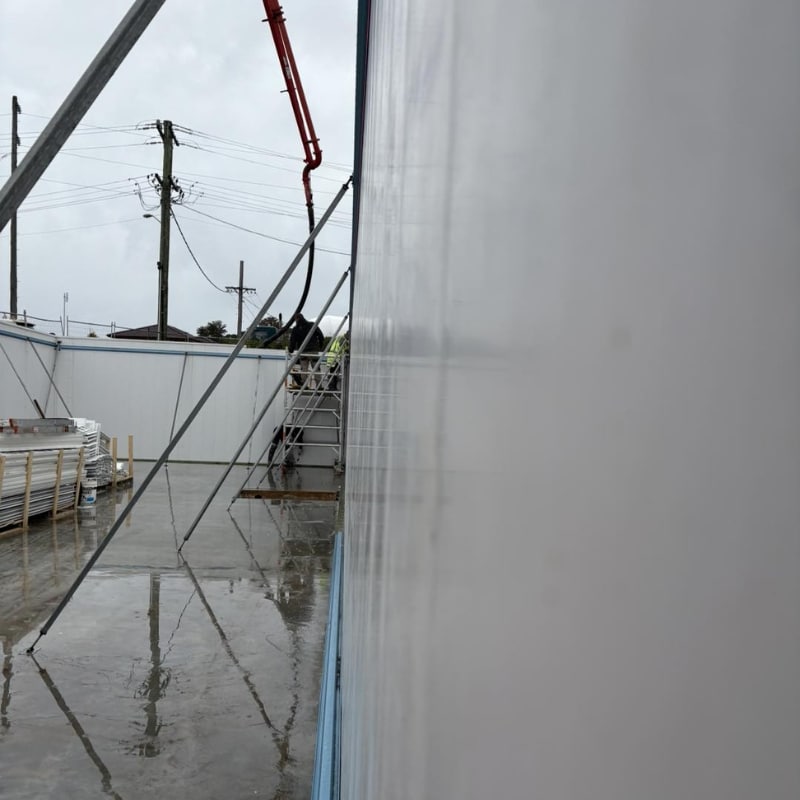
On Australian builds, “cheaper” rarely means “lower installed cost”.
A wall system can look competitive on material price and still blow out the budget once you add labour hours, bracing, steel congestion, cranage and handling, freight, storage, rework, weather delays, and program pressure. That’s why the most useful question isn’t “How much are the panels?” It’s:
What does this wall cost me, fully installed, by the time we’re pouring and finishing?
Lay-flat permanent formwork systems are built around that installed-cost reality. Instead of chasing savings in one line item, they pull multiple cost levers at once: speed, labour, bracing, reinforcement efficiency, logistics, and risk reduction. Done properly, the cumulative effect is significant, with total installed cost reductions of up to 30% when the system is matched to the right job types and planned well.
This guide breaks down where installed cost actually comes from on Australian sites, how lay-flat permanent formwork changes the maths, and how Rise Wall fits into real-world use cases like retaining walls, basements, load-bearing walls, and remote/regional projects.
Installed cost: what you’re really paying for
If you’ve ever compared blockwork, bulky “non-lay-flat” wall formwork, and traditional temporary formwork, you’ll already know the budget pain usually shows up in time and labour — not just materials.
Installed cost typically includes:
• Labour to set out, handle, cut/modify, install, brace, and check alignment
• Steel fixing time and congestion issues (which slow everything down)
• Bracing materials and labour (and the space they occupy on site)
• Plant and craneage (or repeated manual handling events)
• Freight and logistics (number of loads, unload events, storage, double-handling)
• Program duration (site overheads, supervision, follow-on trade delays)
• Rework and quality issues (straightness, blowouts, bulging, honeycombing risks)
• Waterproofing scope and remedials (especially on below-ground walls)
• Waste, cleanup, and disposal
A useful benchmark: the LFCS industry commentary notes that formwork can account for up to around 30% of a project budget in many construction contexts, which is why efficiency and waste reduction matter so much.
So when a system can reduce labour, bracing, steel, freight, and program time together, it can move the needle in ways a “slightly cheaper panel” never will.
What “lay-flat” changes, in practical terms
Lay-flat systems are designed to pack and transport efficiently, then unfold on site for installation. That sounds like a logistics feature (and it is), but it also changes:
• How much you can stage on site (especially in constrained metro areas)
• How often you’re handling and moving materials (and how many people it takes)
• How quickly you can get to reinforcement and pour readiness
• How much bracing do you need to keep the wall true during the pour
• How predictable your program becomes (less congestion, fewer touch points)
Rise Products positions Rise Wall as a lay-flat permanent formwork system designed specifically to improve transport and storage, speed installation, and deliver stronger, water-resistant walls.
That’s the foundation for the cost reductions below.
The big cost levers lay-flat permanent formwork pulls
1) Speed: faster install drives cost down (not just “faster for fun”)
Speed is only valuable if it reduces something expensive: labour hours, supervision/overheads, plant time, or program delay risk.
The core value proposition with Rise Wall is speed — up to 70% faster installation compared with traditional alternatives — by removing slow, repetitive processes (think block-by-block construction) and simplifying the sequence into a builder-friendly workflow: install panels, place reinforcement, pour.
Why does that matter for Australian builds?
• Labour is tight and expensive in most markets
• Weather can compress work windows and force resequencing
• Faster walls get follow-on trades moving earlier
• Program certainty reduces the “death by a thousand delays” effect
When you cut install time, you’re not only saving direct labour — you’re reducing the cost of time itself.
Q&A: If it installs faster, does that automatically mean it’s cheaper?
Not automatically. Speed has to convert into fewer labour hours, fewer site days, and fewer rework events. Lay-flat permanent formwork tends to do best when the job has repeating wall runs, constrained logistics, or below-ground waterproofing risk — where time, handling, and remedials are real money.
2) Labour: less handling, fewer steps, no specialist crew dependency
Installed cost is largely labour. Lay-flat permanent formwork aims to make the wall “builder-friendly”:
• Easier handling due to lighter components and fewer awkward moves
• Fewer steps compared with blockwork (no block laying, core filling, and associated rework loops)
• Permanent formwork means no stripping cycle like traditional temporary formwork
• Faster adjustments and on-site modification where needed
Rise Wall is explicitly described as designed by builders for builders, focusing on ease of use and faster installation.
On a typical site, labour savings show up as:
• Smaller install crews (or the same crew achieving more per day)
• Less time lost to congestion around bracing and materials laydown
• Reduced coordination friction with steel fixers and concrete crew scheduling
3) Bracing: up to 50% less bracing changes more than you think
Bracing is one of those hidden budget sinks because it costs you three ways:
• Materials and hardware
• Labour to install, adjust, and later remove/alter
• Space and access limitations (which slow other trades and make pours harder)
Your core inputs call out up to 50% less bracing requirement. That matters because it cascades into:
• Faster install (fewer components, fewer alignment adjustments)
• Less site clutter (especially important in metro builds with limited laydown)
• Easier access for reinforcement placement and concrete placement
• Lower risk of misalignment during the pour
Tie-in to strength: if the system is stronger and resists movement during pour, bracing demands drop — which then feeds speed and labour savings again.
Q&A: Where does “less bracing” matter most?
• Tight-access sites (CBD, infill, narrow setbacks)
• Long straight runs where maintaining line is critical
• High walls or engineered retaining walls where pour pressure management is everything
• Projects with aggressive programs where bracing setup time becomes a bottleneck
4) Steel: up to 20% less steel can be a big installed-cost swing
Steel is rarely just a materials question. It’s also a labour and congestion question.
If a wall system reduces required reinforcement by up to 20% (as per your positioning inputs), the installed-cost benefit can include:
• Lower steel supply cost (obvious)
• Faster steel fixing (less tying, less cutting, fewer bars to manage)
• Less congestion inside the wall (easier concrete placement and vibration)
• Reduced risk of defects from poor consolidation in tight steel zones
Rise Products’ own “Rise Wall Difference” messaging highlights savings and performance claims tied to the system design and steel placement approach.
5) Freight and storage: lay-flat logistics is a cost weapon in Australia
Freight is expensive. Remote freight is brutal. And even in metro areas, the real cost often comes from double-handling and site congestion, not just the invoice from the truck.
Lay-flat is a differentiator because you can transport more wall area per load — up to 5× more per load by your core positioning, which typically means:
• Fewer deliveries and unload events
• Reduced crane/telehandler time and operator costs
• Less laydown space required
• Lower risk of damage from repeated handling
• Simpler staging (materials arrive in the sequence you need)
Rise Products specifically calls out easier transport and storage as a key advantage of the folding/lay-flat design, including suitability for remote sites where logistics are a major constraint.
In Australia, that’s not a “nice to have”. It’s often the difference between a smooth wall program and constant firefighting.
Q&A: When do freight and storage savings make the biggest difference?
• Remote/regional projects where each truck movement is expensive and slow
• Sites with minimal storage (urban infill, live sites, staged refurbishments)
• Jobs with difficult access where unloading is time-consuming
• Projects with strict delivery windows (traffic management, neighbourhood restrictions)
6) Strength: 2× strength feeds straighter walls, lower bracing, and better pours
Strength isn’t just a spec. It’s an installed-cost driver.
A stronger system (your positioning calls out 2× strength) can reduce movement during concrete placement. Less movement means:
• Less bracing required
• Less time spent correcting alignment
• More consistent wall straightness and finish
• Lower risk of “fix it later” patching and remedials
Rise Products highlights structural performance benefits (including prevention of bulging through design features) and overall build quality positioning compared with alternatives like core-filled blockwork.
Strength → less bracing → faster install → lower labour → lower installed cost. That chain is the story.
7) Waterproofing and durability: where the savings can be massive (and understated)
Below-ground and retaining walls don’t forgive mistakes. Waterproofing scope, detailing, and remedials can become an expensive, schedule-wrecking surprise.
Your core positioning calls out high water resistance and up to 70% less waterproofing required (depending on application and design). The installed-cost benefits can include:
• Reduced membrane scope in suitable designs
• Lower remedial risk (leaks are expensive, disruptive, and reputation-damaging)
• Faster progress to backfill and follow-on works
• Better long-term durability confidence
Rise Wall is positioned as water-resistant and a practical alternative for retaining walls and other demanding applications.
Important caveat (because this is Australia and compliance matters): waterproofing requirements are job-specific and should always be validated against your engineer’s design and project waterproofing specification.
Rise Wall in the installed-cost conversation (without turning this into a brochure)
If you’re trying to reduce installed cost, you’re looking for a system that stacks multiple advantages — not one.
Rise Wall is best understood as a lay-flat permanent formwork approach that targets the biggest installed-cost drivers:
• Faster install (up to 70%)
• Lower total installed cost (up to 30%) via combined labour, bracing, steel, freight, and program impacts
• Freight and storage efficiency (lay-flat logistics, remote site suitability)
• Strength and pour stability benefits that reduce bracing and rework
• Water resistance positioning that can reduce the waterproofing scope, where the design allows
If you want a single “mental model”:
Rise Wall isn’t competing on being the cheapest item on a quote. It’s competing on being the wall that’s cheaper when it’s finished.
To see how the system is positioned at the product level, start with the quality lay-flat permanent formwork system.
Comparison angle: where lay-flat permanent formwork typically wins (and why)
Versus blockwork: slow, labour-heavy, and sequencing-heavy
Blockwork is familiar, but it’s time-hungry:
• Block-by-block laying is inherently slow
• Labour intensity is high and skill-dependent
• Core filling and coordination add steps and delays
• Waterproofing risk can be higher below-ground if detailing/execution slips
• Program impact is often the real killer
Lay-flat permanent formwork reduces the step count and accelerates the wall program, which is why speed is one of the first savings you notice on site.
Versus non-lay-flat permanent formwork systems: bulky logistics and more handling
Non-lay-flat systems can be effective, but logistics can erode their value:
• Fewer square metres per delivery
• More laydown space needed
• More handling events (which cost labour and increase damage risk)
• Harder staging on constrained sites
Lay-flat’s “more per load” advantage is especially relevant in Australia’s regional and remote contexts.
Versus traditional temporary formwork: multi-step cycles and stripping time
Traditional formwork can deliver good results, but it often brings:
• More plant dependency
• More time in the cycle (set, brace, pour, cure, strip, clean, reset)
• More schedule exposure (if one cycle slips, everything behind it slips)
Permanent formwork avoids the stripping cycle, which can be a major time and labour saver.
Q&A: Does permanent formwork mean “no formwork safety planning”?
No. You still need proper planning, competent design input, sequencing, inspections, and safe work methods. Formwork risks are serious, and Australian guidance stresses competent design and risk management. A good starting point is Safe Work Australia’s Guide to Formwork.
Where the “up to 30% installed cost drop” comes from
The “up to 30%” claim becomes believable when you stop looking for one magic saving and start stacking realistic reductions across cost buckets.
Here’s how it commonly adds up on Australian builds (the exact mix varies by project):
Labour savings
• Faster installation (up to 70%) reduces crew hours
• Fewer handling events (lay-flat logistics + simpler workflow)
• Fewer steps than blockwork and less cycle time than temporary formwork
Bracing savings
• Up to 50% less bracing reduces materials, labour, and congestion costs
Steel savings
• Up to 20% less steel reduces supply cost and steel fixing labour (plus congestion risk)
Freight and storage savings
• Up to 5× more per load reduces deliveries, unload time, and site staging costs
• Less double-handling lowers damage and rework
Quality and risk savings
• Stronger system reduces movement during pour → straighter walls → fewer fixes
• Water resistance can reduce the waterproofing scope and remedial risk where the design allows
This is why the installed-cost story is stronger than a “price per panel” conversation — and why permanent formwork tends to be evaluated best through total cost, program, and risk.
Application context: making it real on Australian job types
Retaining walls
Retaining walls are where logistics, speed, and waterproofing risk collide.
Lay-flat permanent formwork can reduce installed cost through:
• Faster wall build and pour readiness
• Easier logistics for long runs and staged deliveries
• Reduced bracing requirements
• Water resistance and durability benefits (subject to project design/spec)
Rise Products specifically positions Rise Wall as an alternative for retaining wall construction across residential, commercial, and industrial use cases.
Basement and below-ground walls
Below-ground is where remedials get expensive.
If your detailing and project spec align, water-resistant permanent formwork can help reduce the waterproofing burden and the long-tail risk of leaks. The biggest cost win is often not the membrane line item — it’s avoiding the disruption of rectification.
Residential builds (especially where blockwork is the default)
In residential, the value is usually:
• Faster program (less waiting for walls)
• Less labour dependence in tight labour markets
• Cleaner sites and reduced waste
• Better logistics for difficult access blocks
Rise Products describes Rise Wall as designed to solve blockwork challenges in residential buildings and reduce transport and storage requirements.
Load-bearing walls and engineered applications
Where engineering drives reinforcement and pour stability, system strength and bracing reduction can become major savings — particularly when you’re managing pour pressure, straightness, and finish consistency.
Remote and regional projects
Remote projects magnify logistics:
• Every delivery costs more
• Delays cost more
• Labour availability is harder
• Storage and site organisation can be limited
This is where lay-flat freight efficiency (more per load) and builder-friendly installation can have an outsized impact.
Planning and safety: keep the savings, don’t buy extra risk
Cost savings are only real if they don’t introduce defects or safety exposure.
Australian formwork guidance emphasises competent design and risk management, including planning and documentation appropriate to the work.
Practical “do this every time” checks:
• Confirm engineered design requirements early (loads, wall height, pour rate, sequencing)
• Plan penetrations and services before installation to minimise rework
• Keep bracing and access safe and clear (less bracing helps, but you still need the right bracing)
• Pre-pour inspections: alignment, reinforcement placement, stability, access/egress
• Control pour rate and vibration to suit the wall and reinforcement layout
• Treat below-ground waterproofing as a system decision (detailing matters)
Q&A: What’s the most common way wall systems lose their “installed-cost advantage”?
Rework. It usually comes from late changes (penetrations/services), poor coordination between trades, rushed pours, or treating the wall as “just another material” instead of a sequence that needs planning. The best cost outcomes come when the wall system is chosen early enough to design around it.
A simple decision checklist: Is lay-flat permanent formwork a good fit here?
Lay-flat permanent formwork is usually a strong fit when you have:
• A tight program where wall speed unlocks follow-on progress
• Labour constraints or high labour cost exposure
• Repeating wall runs (efficiency compounds)
• Limited storage/laydown or difficult access
• High freight/logistics costs (regional/remote or delivery-window constrained)
• Below-ground waterproofing risk where water resistance reduces the scope/remedials
• A quality requirement for straighter walls and a consistent finish
If none of those pressures exists (plenty of time, cheap labour, easy access, simple walls), the installed-cost advantage may be smaller — though speed and waste reductions can still be meaningful.
To explore the system approach from a formwork standpoint, see the PVC formwork system.
FAQ
How does lay-flat formwork reduce installed cost on Australian builds?
By reducing multiple cost drivers at once: labour hours (faster install), bracing requirements, reinforcement congestion and sometimes steel quantity, and logistics costs through freight and storage efficiency. The biggest savings typically come from time and handling, not just material price.
Is “installed cost” different from the material price?
Yes. Installed cost includes labour, bracing, steel fixing time, plant/handling, freight and storage, program time, rework, and often waterproofing scope and remedials. A system can cost more per component but still be cheaper overall when installed.
Where does “up to 5× more per load” matter most?
On projects where delivery costs, delivery windows, unloading time, and site storage are constraints — especially remote/regional builds and tight metro sites. Fewer loads and less double-handling reduce labour and risk as well.
Does less bracing really make a difference to the budget?
Yes, because bracing costs you in materials, labour, and congestion. Less bracing often means faster installation, clearer access for steel and concrete, and fewer alignment corrections during the pour.
Can lay-flat permanent formwork replace blockwork?
In many wall applications, it can provide a practical alternative, particularly where speed, labour availability, logistics, and below-ground durability are concerns. The best approach is to evaluate based on job type, engineering, and waterproofing requirements.
What should we watch from a safety and planning perspective?
Formwork work needs competent design input, planning, and risk controls. Use Australian guidance as a baseline and ensure sequencing, inspections, access, and pour controls are properly managed.