



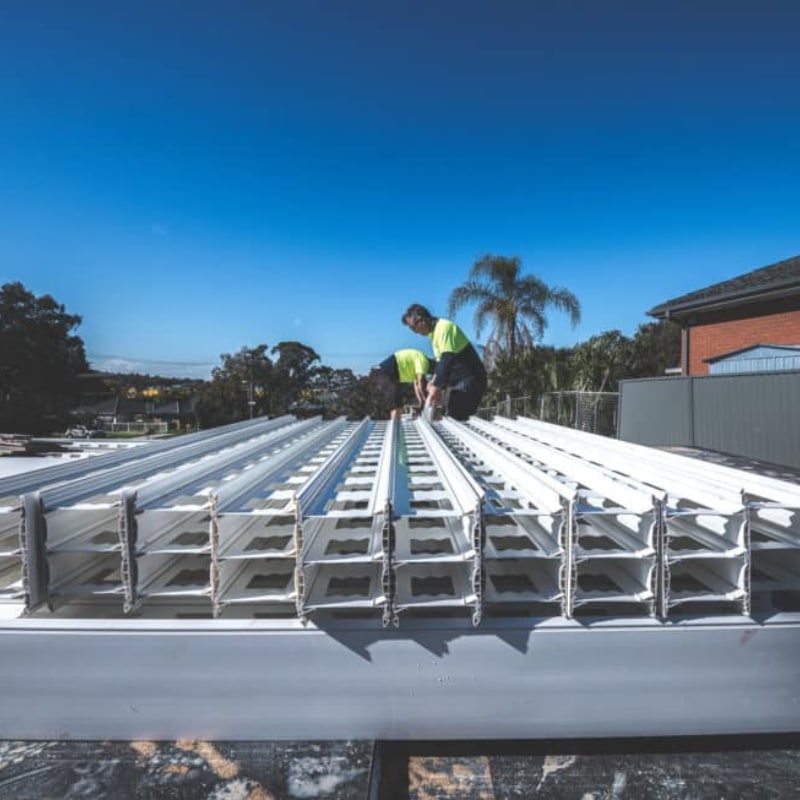
If you’ve ever stood back after a wall pour and thought, “Why isn’t that line dead straight?”, you already know the painful truth: wall quality is often decided before the concrete truck arrives.
People debate concrete mix, slump, vibration, weather, and curing. All important. But for wall straightness and finish quality, the formwork setup (and how it behaves under pressure) is where most jobs are won or lost.
This is why the “lay-flat vs non-lay-flat” conversation matters.
Lay-flat isn’t just a storage trick. It changes logistics, handling, how consistently a system turns up to site, and how quickly teams can get forms aligned, tied and ready for pour. Non-lay-flat systems can still deliver excellent results, but bulkier transport and tighter site logistics can create more friction: more handling, more congestion, and more opportunities for rushed bracing or compromised alignment.
On Australian sites—tight access, variable ground, storm events, remote freight, and labour constraints—those small frictions can snowball into real defects: bowing, steps, misaligned joints, fins, honeycombing, patching, and delays.
This guide explains what lay-flat and non-lay-flat mean in practice, how each impacts straightness and finish, and the checks that keep walls plumb and clean.
What “lay-flat” and “non-lay-flat” actually mean on a wall job
At the simplest level:
• Lay-flat formwork is designed to pack down flat for freight and storage, then assemble efficiently on site
• Non-lay-flat formwork typically arrives bulkier or pre-formed, taking more space to transport and store
That seems like a logistics detail, but it connects directly to quality because logistics affects time, and time affects behaviour.
When crews feel pressure, the first things to slip are the things that keep walls straight:
• consistent tie spacing
• symmetrical bracing
• joint sealing and paste control
• line-and-level checks before the first lift
Lay-flat systems also reduce site clutter. Less congestion generally means less damage to form faces, fewer “make it work” fixes, and fewer compromises around brace placement and access.
Quick answer
Lay-flat formwork tends to improve the odds of straighter, cleaner walls because it reduces logistics friction and speeds up consistent setup. But the wall still lives or dies by alignment, tie patterns, bracing and pour rate.
Why is wall straightness mostly a formwork behaviour problem
Concrete walls go out of line for the same reasons, again and again:
• the form faces move (deflection) as concrete pressure builds
• bracing is uneven, underdone, or installed late
• ties are too far apart, inconsistent, or not tightened evenly
• corners and returns aren’t locked in properly
• Pour rate is too fast for the setup
• joints leak paste, creating weak zones and ugly fins/honeycombing
If the system is stiff and stable, it resists movement and holds geometry as pressure rises. If it isn’t, the wall tells on you immediately: bulges, waviness, shadow lines at joints, and patch repairs that should never have existed.
This is where a stronger permanent wall system can change outcomes because strength, bracing demand, and consistency are linked.
The comparison breakdown that matters on real projects
You asked for a direct breakdown that mirrors the “comparison grid” logic (without turning the post into a sales page). Here it is in plain terms—what typically changes on site when you move from bulky, non-lay-flat approaches to a lay-flat permanent formwork wall system such as Rise Wall.
Transport: flat vs bulky
Lay-flat:
• ships and stores flat, so it generally needs less space per square metre of wall area
• reduces handling cycles because it’s easier to stage and move around a tight site
Non-lay-flat (bulky):
• consumes more truck space and more laydown area
• often increases handling and site congestion, which can lead to more face damage and “rushed assembly” decisions
Freight cost per m²: how the maths works
Freight is rarely priced “per wall”; it’s priced per trip/load, distance, and vehicle type. The useful way to think about it is:
- Freight cost per m² ≈ (total freight cost for the delivery) ÷ (m² of wall system delivered)
If you can carry materially more systems per load (lay-flat is often positioned as up to 5× more per load or per storage footprint), the freight cost per m² typically drops because you’re spreading one trip across more wall area. This difference becomes more noticeable:
• on regional/remote jobs
• when access is tight, and you want fewer deliveries
• when staging is limited and storage efficiency matters
Bracing: up to 50% less (what that really means)
Bracing isn’t just a safety step; it’s geometry control. Less bracing is only a “win” if the system itself resists movement.
When a system is designed to be stiffer and more stable under high pressure, it can reduce reliance on extensive external bracing in many common applications—often positioned as up to 50% less bracing compared with approaches that need more external support to hold line.
Practical impact:
• faster setup and fewer components to manage
• fewer bracing clashes with pour access
• fewer “late brace adjustments” that move your line
Labour: builder crew vs more labour
Labour is where projects bleed money.
A builder-friendly permanent formwork approach is typically positioned to:
• reduce steps (install panels → reinforcement → pour)
• avoid stripping and re-forming processes
• reduce specialist handling, because the system is designed for repeatable installation
Bulkier, more complex setups often demand:
• more handling and staging
• more time to brace, align, and re-check
• more labour hours chasing problems that originate in congestion and inconsistent setup
Strength: 2× strength and what it does for straightness
When a system is significantly stronger (often positioned as 2× strength compared with blockwork outcomes), two things tend to improve:
• reduced movement during the pour (less deflection = straighter walls)
• less reliance on bracing to “force” the wall straight
That ties directly to finish quality because movement shows up as bowing, waviness, and joint shadow lines.
Steel usage: up to 20% less (installed system efficiency)
Steel is a cost line item, but it’s also labour (handling, tying, placement).
Where systems are designed to be structurally efficient as part of the installed solution, they’re often positioned to reduce overall steel usage in certain wall applications—commonly quoted as up to 20% less.
What matters practically:
• less time placing and tying steel
• less congestion inside the wall, which can help with concrete consolidation and reduce voids/honeycombing risk
• fewer delays from steel supply/handling
(As always, steel design is project-specific and must follow engineering requirements.)
Finish: straight vs bowing (how defects are created)
Straight, clean walls come from stability under pressure.
Bowing and waviness usually come from:
• tie spacing inconsistency
• bracing installed late or uneven
• panels moving under pour pressure
• rushed pour rate
A stiffer system plus simpler bracing requirements makes it easier to keep geometry locked, which typically delivers a more consistent off-form outcome with less patching.
Installed cost: up to 30% cheaper (not panel price)
The installed cost story is rarely “cheaper panels”. It’s usually:
• less labour
• less bracing
• potentially less steel
• lower freight per m² (fewer deliveries or more m² per load)
• less rework and patching
• compressed timelines (earlier completion)
That’s why the total installed cost is often positioned as up to 30% lower than slower, labour-heavy alternatives.
How Rise Wall fits naturally into this topic
This blog is about straightness and finish. That naturally connects to a system designed to reduce movement and simplify setup.
Rise Products positions Rise Wall as a lay-flat permanent wall formwork option that’s built around:
• faster install (often positioned as up to 70% faster)
• lower installed cost (often positioned as up to 30% lower)
• less labour and less bracing
• freight and storage efficiency (lay-flat, up to 5× more per load/storage footprint)
• stronger system performance (often positioned as 2× strength)
• water resistance (often positioned as up to 70% less waterproofing required in typical scenarios)
If you want the product overview for context, it’s here: lay-flat permanent formwork
The finish quality link people miss: joints and paste control
A “clean” wall isn’t just straight. It’s also consistent:
• minimal grout loss at joints
• minimal fins and flashing
• even texture (especially for off-form finishes)
• fewer voids or honeycombing
Joint control is easier when the system goes together consistently. The more variable the assembly (especially when components are damaged through repeated handling or poor storage), the more likely defects telegraph through to the face.
This is where lay-flat logistics can indirectly improve finish: fewer handling cycles and less congestion can mean fewer damaged edges and better joint seating.
The drivers that matter more than the label
Even with the best gear, a wall can still go out of plumb if the basics aren’t disciplined.
Alignment: line, level, plumb — before you pour
Check:
• starter/kicker line is straight and true
• corners and returns are locked and braced early
• plumb is verified at multiple points, not just ends
• steps/set-downs are treated as higher-risk geometry points
Tie patterns: consistent spacing beats “close enough”
Tie spacing is one of the fastest ways to create bulging if it’s inconsistent.
Do this:
• keep spacing consistent along runs
• tighten evenly so faces pull together uniformly
• treat corners, ends and penetrations as high-pressure zones
Bracing: stop thinking of it as “temporary”
Bracing controls geometry under pressure.
Good bracing is:
• installed early
• symmetrical
• aligned to the pour plan
• re-checked after reinforcement placement (steel can bump alignment)
Pour rate: straight walls often come from slower, smarter placement
Fresh concrete pressure on vertical formwork is strongly influenced by placement rate and concrete behaviour. This is not the place for guesswork.
Australian guidance also emphasises planning pour rates before finalising formwork design and drawings. For a solid safety/planning reference, see Safe Work Australia formwork guide.
Where lay-flat tends to win hardest in Australia
Remote and regional projects
Freight can dominate installed cost once you’re outside major metros. If you can move more m² per load, freight cost per m² usually improves, and site congestion drops.
Retaining walls and basement walls
These are unforgiving because:
• they face water and hydrostatic pressure
• waterproofing continuity matters
• access is often limited
A water-resistant permanent formwork approach can reduce downstream waterproofing workload in many typical scenarios—often positioned as up to 70% less waterproofing required compared with blockwork approaches, depending on design and site conditions.
Residential builds under time pressure
Builder-friendly systems matter most when a project is juggling multiple trades and tight sequencing. Fewer steps and faster setup reduce the probability of rushed, quality-killing shortcuts.
If you want a broader system overview in the “category sense” (still informational), see: quality permanent wall formwork systems
A practical pre-pour checklist for straighter walls and cleaner finishes
Use this right before the first lift goes in.
Geometry and alignment
• baseline straight (string line/laser)
• corners square and braced
• plumb checked at multiple points
• returns/penetrations/steps treated as additional bracing and tie-risk zones
Form face and joints
• faces clean, undamaged
• release agent appropriate and consistent (if used)
• joints seated and sealed where required
• no visible gaps that will leak paste
Ties and bracing
• tie spacing consistent and tightened evenly
• braces installed early and symmetrical
• Bracing doesn’t clash with pour access
• re-check after steel placement
Pour plan
• pour rate agreed and realistic
• vibration approach planned (corners/returns)
• Roles are clear, so placement stays controlled
Q&A: Does lay-flat automatically mean straighter walls?
No. Lay-flat improves logistics and consistency, which makes it easier to do the “straight wall basics” correctly. Straightness still comes from alignment, ties, bracing and controlled pour rate.
Troubleshooting: what the wall is telling you
If you see bowing or bulging
Likely causes:
• ties too wide or inconsistent
• bracing uneven/late
• pour too fast
• insufficient stiffness for lift height/pressure
Next time:
• tighten tie discipline
• brace early and evenly
• set a pour-rate plan
• Use a system that reduces reliance on excessive bracing through higher inherent strength
If you see honeycombing or voids
Likely causes:
• grout loss at joints
• poor consolidation near congested steel
• inconsistent vibration technique
Next time:
• seal joints properly
• plan vibration at corners/returns
• reduce internal congestion where design allows (steel efficiency helps)
If you see fins and flashing
Likely causes:
• joint gaps
• worn mating edges
• damage from handling/storage
Next time:
• improve handling and staging
• keep damaged components out of high-finish zones
• treat freight/storage efficiency as a quality lever
Final FAQ
Is lay-flat formwork only about storage?
No. Storage is the obvious benefit. The bigger impact is what storage and transport efficiency does to time, handling and setup quality.
Can non-lay-flat formwork deliver excellent walls?
Yes. The risk is that bulk and congestion can increase rushed setup and inconsistent bracing. Quality comes from disciplined installation and a controlled pour plan.
How does “less bracing” connect to finish quality?
Less bracing is only helpful if the system is stiff enough to hold geometry. When it is, fewer braces can mean faster setup, fewer access clashes, and fewer late adjustments that knock walls out of line.
Do you always get up to 20% less steel?
Not always. Steel design is project-specific. The point is that system efficiency can reduce steel requirements in some common wall applications, which reduces both material cost and labour handling.
What’s the best way to think about installed cost?
Installed cost is labour, bracing, steel, freight per m², time, and rework—more than the panel price. That’s why installed savings can be meaningful when the system reduces steps and logistics friction.