


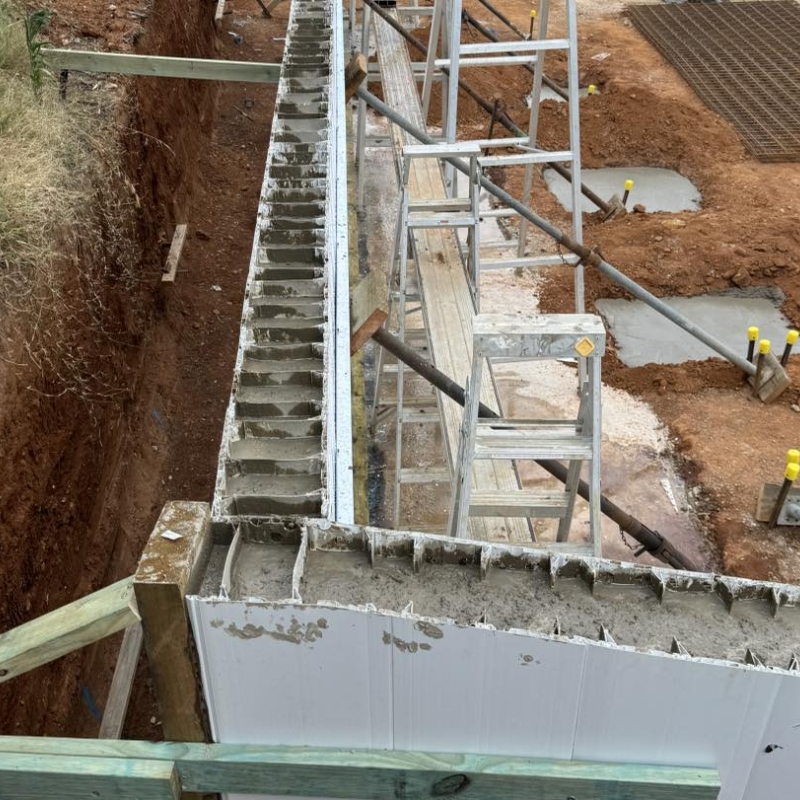
Concrete can be pretty relentless when it comes to pouring. If the formwork isn’t up to snuff, even a slight bow can throw things off balance, leading to misaligned walls, added bracing, and costly do-overs. You lose days (and dollars). Whether you’re laying basement walls in Brisbane or building up mid-rise cores in Texas, understanding what causes bowing—and how to prevent it—is key. We’re diving into the physics at play, the real-world cost implications, and a bunch of tried-and-true tips for keeping those walls straight. Plus, let’s see why the Rise Wall permanent formwork system could be a game-changer, with claims of being up to 70% faster to install than the block-by-block methods.
1. Formwork Bowing: What’s the Deal?
You know when fresh concrete pushes against the formwork panels, and they start to bend out? That’s bowing. Even a small bend can:
- Throw a wall out of line, leading to grinding or touch-ups
- Cause honeycombing or gaps where concrete doesn’t settle perfectly
- Mess up waterproof layers that need a flat base
- Send you on a rework spiral that’ll stretch your timeline
For residential projects, bowing can hold up carpentry and finishes. On bigger jobs, like commercial cores, it might just halt the whole cycle. Often, you won’t notice it until the formwork is stripped, or worse, when the concrete’s already set. Better to prevent it altogether and save yourself the headache.
2. Fresh Concrete Pressure: What’s Going On?
When you pour fresh concrete, it acts a lot like a thick liquid. That pressure ramps up with how deep and fast you pour:
- Height of Pour: Taller walls mean more pressure at the base.
- Rate of Placement: The quicker you pour, the higher the pressure because the concrete hasn’t started setting yet.
- Concrete Temperature: Hotter days can speed up setting time and slightly drop peak pressure, while cooler temperatures slow it down.
- Mix Design: High-flow mixes hold more pressure than their stiffer counterparts.
Knowing these factors can help teams plan their pour rates and pick the right formwork strength for the job.
3. Why Does Bowing Happen? Here are Seven Reasons
- Under-Sized Form Panels
Thin timber or steel forms can flex if they aren’t thick or strong enough. - Lack of Bracing or Ties
Without secured walers, ties, or kickers, panels can spread under pressure. - Uneven Pour Speeds
Faster pouring in one area can create “hot spots,” concentrating pressure on a small part of the panel. - Prolonged Vibrator Use
Holding the vibrator on too long liquefies the mix too much, causing blow-outs. - Wet or Swollen Timber Forms
Timber can bend more easily when wet. - Old or Damaged Panels
Cracked, dented forms tend to bow first under stress. - Bulky Panels with Limited Tie Options
Rigid PVC systems might limit tie options, making it hard to brace effectively.
Remote sites have it even tougher because it’s hard to get extra bracing materials quickly.
4. The Ripple Effect: Bowing’s Hidden Costs
A little bow in your formwork can turn into a big problem:
- Redoing Work: You might need to tear down, grind, or recast—adding days and extra costs.
- Waterproofing Changes: Uneven walls mean thicker membranes, which cost more.
- Delays for Other Trades: Framing or other contractors might need to reschedule, meaning potential fees.
- Late Penalties: Delays can trigger fines on commercial jobs, easily running into tens of thousands.
Once you do the math, it’s clear that preventing bowing can actually protect your budget.
5. Types of Formwork That Stand Up to Pressure
Here’s a quick look at how different wall-forming methods handle concrete pressure.
| Formwork Type | Bowing Resistance | Why It Bows | Cost & Time Impact |
| Blockwork (CMU) | Weak on tall walls | Joints can’t hold against pressure until set | Slow, labour-intensive, needs re-plumbing |
| Conventional Timber/Ply Forms | Okay if braced well | Timber warps when wet; heavy on labour | Extra bracing eats into cost savings |
| Non-Lay-Flat PVC/Composite | Moderate | Limited tie spots; pressure builds between ribs | More bracing needed, costs higher |
| Rise Wall Lay-Flat | Strong (2 × strength) | Dense ties reduce panel bend | Faster install, lower costs, and efficient |
For deeper technical detail on panel geometry and wall straightness, see our explainer on the difference between lay-flat and non-lay-flat formwork.
6. Conditions That Make Bowing Worse in Australia and the US
- High Heat (NT, QLD, Arizona, Nevada)
Quick setting can hide bowing signs, locking imperfect panels in place. - Cold Pours (VIC Alpine, Minnesota, New York)
Slow setting means sustained pressure; weak bracing gives out over time. - Remote Locations (Pilbara, Alaskan outposts)
Hard to get more materials quickly, so overloading panels is risky. - Seismic Areas (NZ-adjacent, California)
Strict wall alignment rules mean any bow can lead to pricey fixes.
Planning with these regional issues in mind is your first defence.
7. Pre-Pour Checklist to Avoid Bowing
Before you start pouring, make sure to:
- Check panel condition—watch for dents or water damage.
- Make sure tie spacing is as per design, not just eyeballed.
- Inspect walers and kickers—tight and well-anchored.
- Set and share the pour plan with pump operators.
- Calibrate vibrators to avoid overly liquefying the mix.
- Have backup bracing and hardware on-site.
Just a few extra minutes can save you hours of fixes.
8. Mistakes You Don’t Want to Make
- Over-Tightening One Tie First: Warps panels before any concrete shows up.
- Using Unrated Off-Cuts as Spacers: Weak wood pieces can crush under pressure.
- Skipping Mid-Shift Checks: Afternoon spikes in pressure can catch you off guard.
- Assuming Reused Forms Will Hold: Small cracks can quickly lead to big bows.
Avoiding these mistakes keeps walls straight and costs down.
9. When Bowing Becomes Dangerous
Formwork failure is a serious matter. According to the Safe Work Australia guidelines, any movement, unexpected noises, or tie failures during a pour call for a full stop. Builders must:
- Stop pouring immediately
- Isolate the risky area
- Fix bracing with an engineer’s advice
Ignoring early warning signs risks more than just fines—it could lead to disaster.
10. How Rise Wall Solves Bowing Issues
Rise Wall panels have dense ribs and more tie spots than those bulky non-lay-flat counterparts. Here’s what that means:
- Twice the Strength: Panels don’t bend in high-pressure pours.
- Up to 70% Quicker to Install: No need for stripping, fewer braces, straightforward setup.
- 30% Lower Cost: Labour savings can make up any material price difference.
- Five Times More Freight Efficient: Lay-flat design cuts transport needs, ideal for remote jobs.
- Waterproofing: Tighter joints mean a lot less membrane is needed.
By tackling bowing, bracing, and more in one go, builders can ensure quality and speed—without needing any special crews.
FAQs
- Does bowing always show up immediately after a pour?
Not always. With timber forms, you might see it during stripping. In permanent systems, laser checks or a straight edge might show minor curves days later. Best to prevent it with stiffer panels and good bracing. - Can you fix bowing during a pour with more timber walers?
They help, sure, but doing it mid-pour is risky and can mess up fresh concrete. Better to have strong bracing from the get-go. - Is high-slump concrete more likely to cause bowing?
Yep. Higher slump means it’s more fluid, which ups the side pressure. Adjust the pour rate or beef up formwork if high slumps are a must. - How does lay-flat formwork help with transport?
Since the panels stack flat, you can fit about five times more per truck compared to bulky ones. Fewer trips save on cost and cut down on the carbon footprint—great for out in the sticks.
Final Thoughts
Formwork bowing messes with both your schedule and your budget. By understanding the pressure of concrete, planning bracing smartly, and picking a high-strength, lay-flat permanent system, builders in places like Australia and the US can pour faster, straighter, and safer. If bowing or tricky wall shapes are dragging your projects down, looking into a strong, stay-in-place system might be the next best move.