



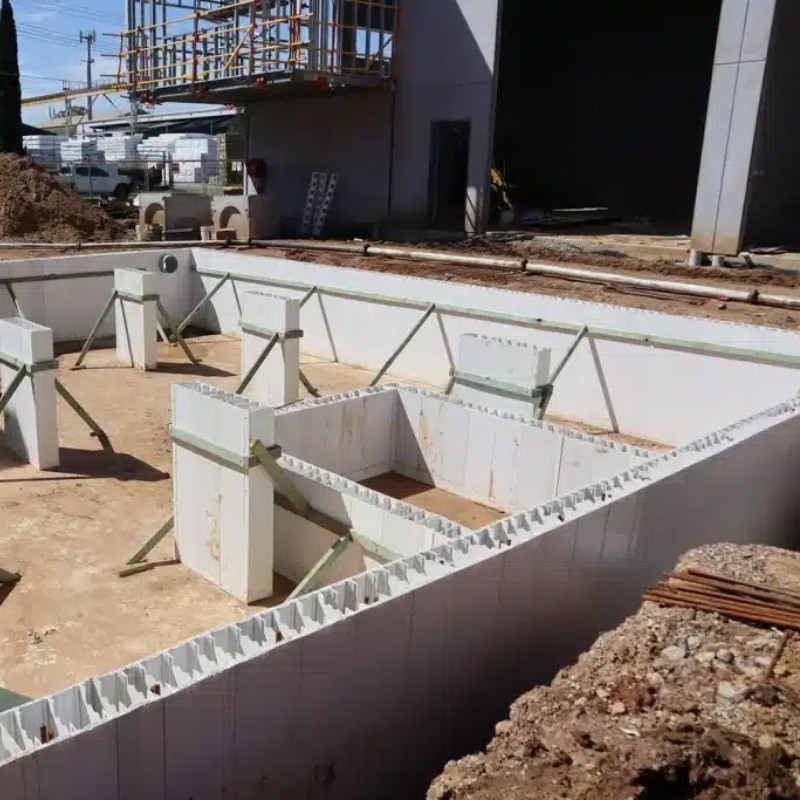
Concrete walls are meant to be the “quiet achiever” of a build: straight, strong, durable, and largely trouble-free once the forms come off. But when defects show up, they tend to show up loudly. Honeycombing. Blowouts. Cracks that appear overnight. Rough, voided patches that don’t look right. Water finds its way through places it shouldn’t.
The good news is that most wall defects come from a small set of repeatable causes. The better news is that once you understand the cause-and-effect chain, you can prevent the same defect from happening again on the next pour.
This guide breaks down the most common concrete wall defects, what they look like, what typically causes them, what to do first when you find them, and the practical controls that make the biggest difference on Australian sites.
Start here: why wall defects happen
Most wall defects are not “random concrete problems”. They’re usually the result of one (or more) breakdowns across five stages:
• Mix and workability (including segregation risk)
• Formwork condition (tightness, stability, bracing, ties, penetrations)
• Placement method (lift height, pour rate, hose handling, access around reo)
• Consolidation (vibration technique, timing, coverage)
• Early-age protection and curing (heat, wind, moisture loss, timing)
If you take only one idea from this article, let it be this: repair decisions make more sense after you identify the stage that caused the defect. Patching the symptom without fixing the cause is how defects repeat.
On projects where the wall build approach varies from site to site, it can help to align expectations early by reviewing typical wall system applications and how they influence placement access, reinforcement congestion, and consolidation effort.
Honeycombing in concrete walls
What honeycombing looks like
Honeycombing is the classic “rock pockets” look: coarse aggregate visible, voids and cavities in the surface, and a lack of paste around the stones. It often clusters:
• At corners and wall intersections
• Around congested reinforcement
• At penetrations and embeds
• Near the base of the wall if grout/paste has escaped
• Along leaky form joints
It’s also commonly confused with smaller surface bugholes (pinholes). Bugholes can be a finish issue; honeycombing is usually a consolidation and/or formwork issue.
What causes honeycombing (the usual suspects)
Honeycombing is rarely one thing. It’s typically a combination of:
• Poor consolidation: Under-vibration, vibrating too quickly, or missing zones behind reo and at corners
• Restricted flow: Reinforcement congestion, tight spacing, awkward geometry, poorly placed starters
• Leaky formwork: Paste/grout loss through joints, tie holes, penetrations or poorly sealed shutters
• Harsh mix / low workability at placement: Slump loss, long pump lines, hot weather, delayed placement
• Bad placement habits: Dropping concrete from excessive height (segregation), pushing it sideways with a poker, or pouring too thick a lift
If you want a single technical reference point for site practice, CCAA’s guidance on compaction and vibration is a solid benchmark: CCAA guidance on concrete compaction and vibration.
When honeycombing matters (and when it’s more cosmetic)
Honeycombing matters most when it affects durability or structural capacity, for example:
• The defect depth reduces the concrete cover over the reinforcement
• The defect is extensive (not localised) or repeats in patterns (form leaks, systematic under-vibration)
• Reinforcement is exposed or close to exposed
• The wall is retaining soil/water or is below ground (permeability and water ingress risk)
• There is evidence of voids behind the face (not just surface pockets)
Small, shallow honeycombing in non-critical areas can be repaired as a surface defect. Deep honeycombing that reduces cover or suggests internal voids needs proper assessment before you “make it look good”.
Q&A: Is honeycombing a structural defect?
Sometimes, but not always. Honeycombing can be purely local surface voiding, or it can indicate poor consolidation through the section. The deciding factors are depth, extent, location, and whether the cover to reinforcement is compromised. If you can see aggregate with missing paste and the defect appears deep or widespread, treat it as a durability/strength concern until assessed.
Blowouts during a wall pour
What a blowout is
A blowout is a formwork failure during the pour where the form gives way and concrete escapes. It’s dangerous, messy, expensive, and almost always preventable.
Common causes of blowouts
Blowouts are typically caused by a combination of pressure and weakness:
• Pour rate too fast for the formwork system and bracing
• High lateral pressure from high-slump mixes or fluid mixes, especially in tall walls
• Inadequate bracing or tie spacing, or incorrect tie installation
• Weak points at penetrations, poorly supported joints, damaged panels, or poor connection details
• Over-vibration near a vulnerable joint (can spike pressure locally and loosen forms)
• Poor supervision of lifts (wall gets “filled” too quickly without staged checking)
In practice, blowouts often follow the same story: the pour is going well, pace picks up, and a weak point that wasn’t obvious becomes the failure point.
Where blowouts repeat across jobs, it’s usually worth stepping back and confirming the intended wall formwork applications guide for that project type, because bracing, tie strategy, and placement planning need to match the wall method being used.
What to do if a blowout happens
This is not repair advice (site safety always comes first), but the practical next steps after the incident are usually:
• Document the failure location, lift height, and time during pour
• Photograph the tie spacing, braces, and the failed connection
• Identify the trigger (rate, vibration pattern, joint detail, penetration)
• Don’t restart with the same setup and pace
Blowouts are a “system” problem: if one section failed, you should assume other sections may be at risk until checked.
Q&A: Do blowouts mean the concrete mix was “wrong”?
Not necessarily. Mix workability can contribute to pressure, but blowouts usually happen when formwork capacity, bracing, ties, and pour rate don’t align. The mix might be fine for one setup and risky for another. It’s a coordination issue, not just a concrete issue.
Cracks in concrete walls
Cracking is the defect that causes the most anxiety because cracks can be benign or serious. The goal isn’t to pretend cracks don’t happen; it’s to understand which cracks matter and what they’re telling you.
Common crack types and what causes them
Plastic shrinkage cracks
These occur while the concrete is still fresh (often within the first few hours). They can be driven by:
• Wind and low humidity are drawing moisture from the surface
• Hot weather (especially with strong sun and warm formwork)
• Poor early protection and curing discipline
They often look like fine, shallow cracks, sometimes in a random or “map” pattern.
Settlement cracks
If concrete settles but is restrained by reinforcement, starter bars, or embeds, cracks can form above those restraints. These can show up as cracks aligned with reo or at changes in section.
Drying shrinkage and restrained shrinkage cracks
As concrete dries, it shrinks. If it’s restrained (by footings, returns, slabs, ground pressure, or reinforcement layout), tensile stresses develop and cracking can occur. This is a major reason you see vertical cracking patterns in long wall runs without appropriate crack control detailing.
Thermal cracking
Temperature gradients and heat of hydration can cause movement. If that movement is restrained, cracking can occur. This is more relevant in thicker sections, mass pours, or hot weather, but it can also show up when forms are stripped early and the wall experiences rapid cooling or drying.
Structural cracking
Structural cracking is associated with loading, movement, or inadequate capacity. Warning signs include:
• Cracks that widen over time
• Cracks with displacement/offset
• A pattern that aligns with known load paths or movement joints
• Cracks accompanied by water ingress, soil movement signs, or rotation/bowing
Q&A: How do you tell if a crack is “serious”?
Use a simple triage:
- • Width and change: Is it widening or stable?
• Pattern: Random fine cracks vs a consistent structural line
• Movement: Any offset, step, or rotation?
• Location: High-stress zones, openings, corners, construction joints
• Consequences: Water ingress, exposed reo, corrosion staining
If you’re unsure, treat it as potentially serious until you can confirm it’s stable and non-structural.
Segregation, laitance, and weak surface layers
Not all defects are dramatic. Some show up as a weak, sandy surface, a dusty layer, or flaking.
Segregation
Segregation is when coarse aggregate separates from the paste. Causes include:
• Dropping concrete from excessive height
• Overworking the mix or pushing it sideways with vibration
• Excess water added on site
• Poor handling at the pump hose end
• Too-high slump for the placement conditions
Segregation can lead to honeycombing, weak zones, and poor finish consistency.
Laitance and weak surface layers
Laitance is a thin, weak layer of cement paste and fines that rises with bleed water and sets on the surface. It can contribute to poor bonding of coatings or renders and can hide other issues.
Common causes:
• High bleed water (mix, placement, or finishing habits)
• Poor curing or rapid drying
• Finishing too early (more relevant to slabs, but can apply to wall tops and formed surfaces at joints)
The wall-specific trouble spots (where defects cluster)
Concrete walls have predictable “defect hot zones”. If you want fewer surprises at strip, pay extra attention here:
• Corners and returns (restricted flow, hard to consolidate evenly)
• Around penetrations and embeds (formwork leakage points)
• At construction joints (cold joint risk, poor paste continuity)
• At congested reo zones (poor access and shadowing)
• Near the base of tall walls (pressure + grout loss + vibration coverage challenges)
This is where planning your placement and consolidation sequence matters more than the brand of vibrator.
A practical prevention checklist (by stage)
Before the pour: formwork and access
Confirm formwork is tight: seal joints, tie holes, and penetrations
• Check bracing, tie spacing, and fixings to suit wall height and expected pour rate
• Ensure access for placement and vibration behind reo (don’t assume “it’ll flow”)
• Plan lift heights and the pour sequence, especially around corners and openings
• Confirm reinforcement congestion doesn’t create “dead zones” for consolidation
During the pour: placement discipline
• Place in controlled lifts rather than “filling the wall” as fast as possible
• Keep the hose end close to the placement level to avoid segregation
• Avoid long horizontal pushing of concrete inside forms
• Watch for signs of grout loss at joints (a honeycombing warning sign)
• Maintain a steady pace that matches the formwork system
During the pour: vibration discipline
• Use a consistent pattern and spacing so you don’t miss zones
• Don’t “stab and run” — give each insertion enough time to consolidate
• Avoid over-vibration at vulnerable joints and penetrations
• Pay extra attention around corners, starters, and congested reo
After the pour: early-age protection
• Protect from hot wind and rapid drying as soon as practical
• Don’t strip forms prematurely if it will shock the wall surface into rapid drying
• Manage curing so that early-age shrinkage and thermal stresses are reduced
Q&A: Can you over-vibrate and cause defects?
Yes. Over-vibration can contribute to segregation and can increase local form pressure (especially near weak points), which is one factor that can contribute to blowouts. Vibration is about coverage and technique, not brute force.
What to do when you discover a defect
The first reaction is often to patch. The better reaction is to diagnose.
Step 1: document and map it
• Photograph defects with a scale reference
• Mark locations and patterns (the same line could mean form joint leakage)
• Note wall height, lift sequence, and where the hose/vibrator was used
Step 2: classify severity
A useful (non-engineering) classification:
• Finish issue: minor bugholes, superficial marks, shallow surface imperfections
• Durability risk: honeycombing that reduces cover, repeated voiding, permeability risk, and below-ground walls
• Structural concern: deep voiding, exposed reo, displacement cracks, cracks that are widening/moving, bowing/rotation
Step 3: match the response to the cause
- • Honeycombing from grout loss? Fix the formwork sealing and joint details next time.
• Honeycombing from missed consolidation zones? Fix access and vibration coverage.
• Cracking from early drying? Fix early-age protection and curing.
• Blowout from pressure/bracing mismatch? Fix formwork design, ties, and pour rate discipline.
When you’re reviewing defect patterns across multiple pours, it helps to record not just the symptom but the method used for wall installation and application, because the easiest way to reduce repeat defects is to improve the repeatability of the wall build process itself.
FAQ
What’s the difference between bugholes and honeycombing?
Bugholes are small surface pinholes often related to trapped air against the form face. Honeycombing involves larger voids with visible aggregate and missing paste, typically linked to consolidation issues, restricted flow, or grout loss.
Does honeycombing always need repair?
Not always. Shallow, local honeycombing in non-critical areas may be treated as a surface defect. Honeycombing that compromises cover, is widespread, is below ground, or suggests internal voids should be assessed and repaired appropriately.
Why do cracks appear after formwork is stripped?
Stripping can expose the wall to rapid drying and temperature change, which can accelerate shrinkage and thermal stresses. Some cracks are shrinkage-related; others may indicate restraint, settlement, or loading issues.
What is the most common cause of blowouts?
A mismatch between pour rate/workability and the formwork’s capacity (ties, bracing, joints). Weak points at penetrations and poorly supported joints are frequent failure locations.
Can adding water on-site cause wall defects?
Yes. Adding water can increase segregation risk and reduce strength and durability. It can also affect form pressure and increase the likelihood of bleed-related issues, depending on the situation.
When should you escalate to an engineer or experienced remediation specialist?
Escalate when you see exposed reinforcement, deep/widespread honeycombing, cracks that are widening or show displacement, bowing/rotation, or any defect associated with water ingress in critical walls (retaining/below-ground).