



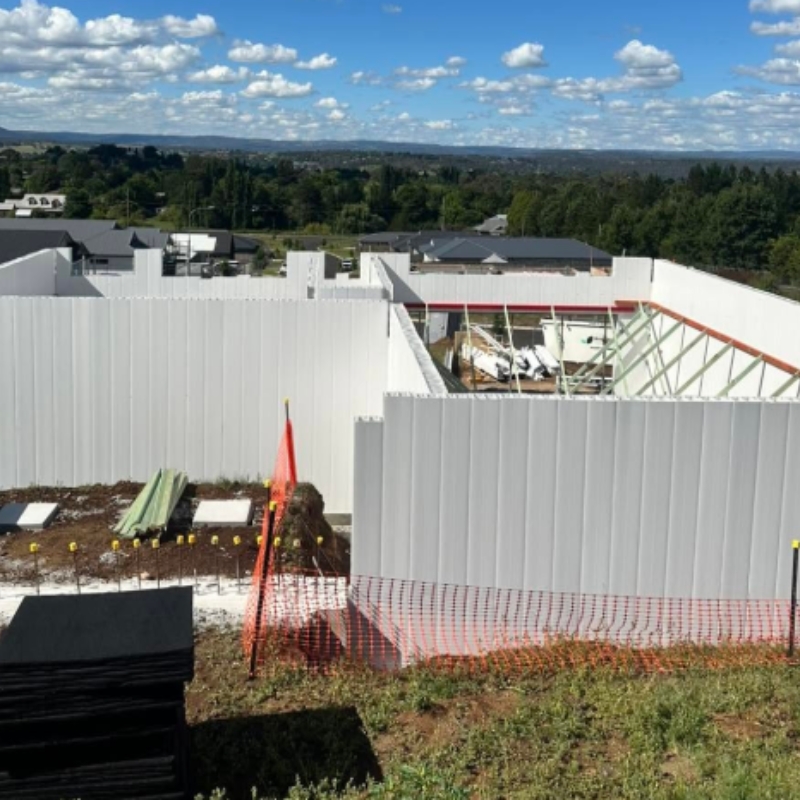
Transport and storage rarely star on a project cost report, yet they can quietly erode profit on every load that rolls through the gate. When concrete wall components arrive bulky or partly assembled, you pay for moving mostly air, juggling double-handling on congested sites and parking extra trucks while cranes wait. Choosing a wall solution that stores and ships flat can turn that invisible drain into tangible savings. By the end of this guide, you will understand how lay-flat permanent formwork packs up to five times more wall area per truck, shrinks labour and bracing needs, and ultimately protects your bottom line. If you would like to see real-world project examples that use the system described here, explore the range of Rise Wall applications built across Australia and the United States.
Freight Is the Silent Margin Killer in Modern Construction
Freight rarely makes headlines on tender day, yet Index-linked diesel surcharges, driver shortages and port congestion have raised Australian road freight rates by roughly 8 percent year-on-year since 2021. The United States shows a similar curve. According to the federal National Freight and Supply Chain Strategy, efficient freight handling will be critical for keeping construction affordable over the next decade.
Traditional wall solutions magnify the impact of rising freight costs for three reasons:
- Bulky or pre-formed panels waste cube space, leading to light but voluminous loads.
- Palletised blockwork demands multiple truckloads plus forklifts at each end.
- Additional bracing, mesh and waste pallets require separate deliveries and storage.
Every extra delivery is another crane booking, another traffic control crew and another layer of site congestion that can ripple through the program. Shift that lost time to the critical path, and the project margin evaporates.
What Makes a Formwork Panel “Lay-Flat” and Why It Matters in Transit
A lay-flat permanent formwork panel folds or nests almost completely flat for transport. For Rise Wall, this is achieved with hinge-style connections and lightweight composite ribs that allow the panel to collapse to roughly one-fifth of its assembled width without affecting strength or water resistance once poured.
Key traits that deliver freight wins:
• Collapsible geometry clears the air out of each load, turning wasted void into usable volume.
• Lightweight yet robust skins allow manual unloading where small cranes are unavailable.
• Integrated alignment ribs mean fewer loose spacers and tidy packs.
• Panels can be job-cut with standard site tools, so off-site pre-cutting and separate freight orders are minimised.
When the truck arrives, crews unfold, pin and stand panels directly on the line, reducing double-handling and freeing up lay-down space for other trades.
Quantifying the Transport Savings: Up to 5× More Wall Area per Load
Numbers make the argument real. The table below compares three common wall solutions for a 100 m² wall area, typical for a medium-sized basement or retaining wall section.
| Wall Solution | Approx. Wall Area per Standard Semi-Trailer* | Estimated Truckloads for 100 m² | Notes That Affect Cost |
| Traditional block pallets | ≈ 15 m² | 7 | Requires a forklift or telehandler for every pallet, plus multiple restacks on site |
| Non-lay-flat PVC formwork | ≈ 25 m² | 4 | Panels are fragile in transit, often need custom racks, more dunnage waste |
| Lay-flat permanent formwork | ≈ 75 m² | 1.5 | Five times the freight density, panels hand-unloaded if needed, minimal dunnage |
*Figures are averaged from supplier freight schedules and load-density studies on Australian B-doubles. Exact capacity depends on wall thickness and structural steel spec.
The math is simple. Cut five or even two truck movements, and you save:
• Line-haul fees and fuel surcharges
• Loading and unloading plant hire or crane time
• Traffic management costs, especially in CBD or inner-urban streets
• Hourly labour while crews wait for materials to arrive
Savings compound further when freight reductions prevent schedule clashes between deliveries, pours and follow-on trades.
Freight Density Drives Cost per Installed Square Metre
Freight may contribute only a few cents per kilogram, yet with non-optimised wall systems, it can climb above 10 percent of total installed cost on remote or offshore builds. By delivering up to five times the wall area per load, lay-flat formwork removes a sizeable chunk from that equation. When combined with the system’s 70 percent faster install speed and 30 percent lower installed cost, freight efficiency becomes a core margin lever rather than a fringe benefit.
Flow-On Benefits: Less Bracing, Less Handling, Faster Timelines
Freight savings do not stand alone. The strength of a lay-flat panel — up to twice that of blockwork once poured — removes large portions of temporary bracing that otherwise arrive in separate loads. Here is how logistics and structural advantages link together:
• Stronger formwork ribs limit outward deflection during the pour, so fewer external props travel to the site.
• A straighter, stiffer panel reduces re-work and patching. That lowers cementitious repair orders.
• The flat-pack format slashes waste dunnage and packing timber. Less rubbish means fewer skip bin exchanges.
• Reduced truck movements clear hard-stand space, letting concrete agitators enter and exit faster on pour day.
Speed on-site compounds like interest. One hour gained during material handling can unlock several hours down the line when pour windows and crane slots align perfectly instead of overlapping. Multiplying that over multi-level builds explains why builders report up to 70 percent faster wall programs.
Remote and Regional Projects: When Freight Efficiency Becomes Critical
A single truck rerouted due to highway flooding in far-north Queensland or a snow closure in Colorado can cost thousands in lost time and back-charges. Regional projects feel transport shocks hardest because:
• Distance magnifies diesel surcharges.
• Back-haul opportunities are scarce, so carriers charge full round-trip rates.
• Limited craneage on site inflates waiting-time penalties.
• Storage yards are either non-existent or exposed to weather damage.
Lay-flat formwork addresses each pinch point:
- Higher freight density cuts total distance driven.
- Panels can be unloaded manually or with a telehandler, avoiding specialised cranes.
- Smaller, flatter packs store inside a container or shed, protecting product quality in cyclone or blizzard seasons.
Case snapshots from recent Rise Wall projects show up to $18 000 saved on freight alone for a three-storey apartment block in regional New South Wales, driven by a three-to-one reduction in truckloads compared with blockwork.
Common Mistakes That Erase Freight Savings (and How to Avoid Them)
Even the most freight-efficient material can lose its advantage if planning is sloppy. Look out for these traps:
• Ordering too many partial loads. Combine panel, reinforcement and accessory orders where possible.
• Ignoring back-haul schedules. Carriers often offer discounts for return trips when booked early.
• Storing packs on uneven ground. Warped or damaged panels force last-minute replacements that wipe out freight gains.
• Missing crane time windows. If a truck queues off-site for hours, freight savings drain into hire over-runs.
• Skipping pre-pour checks. Panels that require mid-install fixes may demand additional urgent deliveries.
Avoid these with upfront coordination between site logistics, supplier dispatch and carrier routing teams. A short toolbox talk can preserve thousands of dollars.
Quick Checklist: Estimating Freight and Storage Impacts Before You Order
Run through the following questions at tender or procurement stage to capture the true cost of wall materials:
- How many square metres of wall area fit per truckload for each system you are considering?
- What is the return freight cost for bracing, pallets or formwork stripping?
- Can panels be hand-unloaded if cranes are delayed or restricted?
- Is there secure, weather-protected storage on site or will stock sit in the open?
- How many site movements will additional bracing or waste removal create?
- What lay-down footprint do full packs require and will that clash with other trades?
- How will reduced truck traffic shorten overall program timelines?
Score each material honestly. If lay-flat formwork eliminates half the truck movements and one week of crane slots, those savings flow straight to margin.
Linking Freight Efficiency to Installed Cost: The Cost Tri-Factor
Freight is only one pillar of the Rise Wall value equation, yet it interlocks with two others:
• Labour. Fewer materials arriving in fewer loads reduce manual handling hours and supervision overhead.
• Bracing and Steel. Twice-the-strength panels allow lighter prop schedules and less reinforcement, which lowers both material cost and install labour.
• Timeline. Faster wall close-in releases follow-on trades earlier, trimming site prelims and finance costs.
When freight, labour and material consumption fall in parallel, builders report installed cost reductions of up to 30 percent, not just panel price savings. That margin improvement holds even after accounting for distance penalties on far-flung sites.
Comparing Against Other Wall Solutions
Rise already hosts a detailed breakdown of cost differences between wall systems. For a sharper financial perspective on the labour side, review how lay-flat formwork reduces installed costs. It covers wage trends, bracing hours and pour cycle impacts in more depth and complements the freight-first lens of this article.
Frequently Asked Questions
1. Does the five-times freight density apply to every wall thickness?
Density gains vary with wall width and reinforcement spec. On common residential and light-commercial thicknesses, builders routinely see four to five times more square metres per truck. Extremely thick or highly reinforced walls may achieve slightly less, yet still outperform blockwork and non-lay-flat PVC systems.
2. How do lay-flat formwork panels stay waterproof after folding?
The hinge design is engineered so that once unfolded, internal ribs lock the skins into a sealed cavity. After the concrete pour, the panel becomes a composite structure with no external joints. Field tests show up to 70 percent less waterproofing membrane needed compared with blockwork, provided standard detailing around penetrations is followed.
3. Can lay-flat panels be cut on site without specialist tools?
Yes. Most crews use a circular saw with a fibre-cement blade or a cordless multi-tool for small notches. No hot-works permit is usually required, which keeps remote or underground sites safer and faster.
4. How does freight efficiency translate to carbon savings?
Fewer truck movements lower diesel consumption and associated Scope 3 emissions. Builders pursuing Green Star or LEED points can document reduced transport emissions by comparing baseline blockwork deliveries against lay-flat loads.
5. What happens if a panel gets damaged during transport?
Because panels stack flat and rigid, impact damage is rare. Should it occur, minor corner chips can be patched with structural grout on site. Severe damage can be replaced from a small contingency pack that travels with the main order, keeping work moving without emergency freight calls.
Final Thoughts
Freight may sit in the background of most cost plans, but the numbers speak plainly. A wall solution that ships and stores flat can remove truckloads, crane hours and wasted dunnage while tightening the project timeline. Combine that with 70 percent faster installs, 30 percent lower installed cost and twice-the-strength walls, and lay-flat permanent formwork becomes more than a logistics upgrade: it is a direct path to healthier project margins. If your next build will battle long haul distances, tight CBD streets or simply rising diesel prices, it makes sense to include a freight-smart system in the comparison mix.